Why Won't My Senior Horse Eat?
When an older horse goes off feed, dental pain, choke, ulcers, and illness are common causes. A worried owner's checklist, when refusal is an emergency, and how to tempt appetite.
When a senior horse won't eat, the most common causes are dental pain, choke, gastric ulcers, and pain or illness elsewhere in the body. Worn or sharp teeth make chewing hurt, choke physically blocks swallowing, and ulcers or systemic disease suppress appetite. Because a horse that stops eating can deteriorate fast and may be developing colic, a complete refusal of food or water is a veterinary emergency that should not wait.
Few things worry an owner more than a horse turning away from its feed. Horses are grazers designed to eat almost constantly, so a senior that goes off feed is sending a clear signal that something is wrong. This guide gives you a calm, step-by-step way to think it through, the red flags that mean call the vet now, and how to gently rebuild appetite once the cause is being treated.
Soft, Palatable Feeds for an Off-Feed Senior
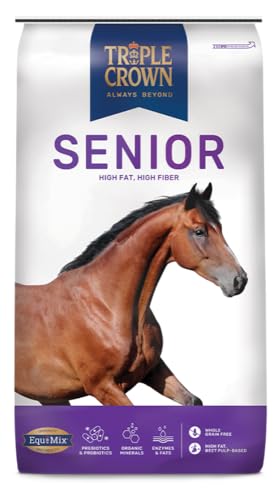
Triple Crown Senior Complete Feed
High-fat, high-fiber feed that soaks into an easy-to-chew mash


Formula 707 Digestive Health Probiotic
Supports gut health and appetite during recovery

Purina Active Senior Horse Feed
Palatable, easy-to-digest feed to tempt a picky older horse
Soaked, soft feeds are invaluable for older horses with dental disease, but they are part of the management, not a diagnosis. If your horse has stopped eating, find out why with your vet before assuming it is just fussiness.
The Common Reasons a Senior Horse Stops Eating
Dental Disease
This is the first thing to check in an older horse. Sharp enamel points, loose or missing teeth, and painful conditions like EOTRH make chewing hurt. The horse may pick at feed, quid out balls of hay, tilt its head, drool, or eat very slowly, and it may accept soft feed while refusing hay. Regular floating and a switch to soaked feeds for poor mouths usually restore appetite. See our guide to senior horse dental care.
Choke
Choke is an esophageal blockage, common in seniors with bad teeth that bolt or poorly chew their feed. The horse suddenly stops eating, stretches its neck, coughs, drools, and may have feed or saliva at the nostrils. It can breathe but cannot swallow. This is an emergency: remove all food and water and call your vet, because of the risk of aspiration pneumonia. Read our full guide to choke in senior horses.
Gastric Ulcers
Ulcers commonly blunt appetite, especially a reluctance to finish grain, alongside mild colic, weight loss, and a dull attitude. Diagnosis is by gastroscopy, and treatment with omeprazole plus a forage-first routine usually helps. See gastric ulcers in horses.
Pain, Fever, and Illness
A horse in pain, whether from laminitis, arthritis, or colic, often goes off feed, and so does one running a fever or fighting infection. Liver and kidney disease, PPID, and other systemic problems can also reduce appetite. This is why a horse that will not eat needs a proper exam rather than just a tastier bucket.
A Step-by-Step Checklist
| Step | What to Look For |
|---|---|
| 1. Watch the horse eat | Quidding, head tilting, drooling, slow chewing |
| 2. Check swallowing | Neck stretching, coughing, nasal discharge means suspect choke |
| 3. Take vital signs | Temperature, pulse, gut sounds, gum color |
| 4. Look for pain or colic | Pawing, rolling, lying down, tense face |
| 5. Note water intake | Refusing water too is more urgent |
Senior Horse Care Planner
Track your senior horse's vital signs, feed and body condition, farrier and dental schedule, medications, and quality of life, all in one printable planner.
When It Is an Emergency, and How to Tempt Appetite
Call your vet immediately if your horse refuses both food and water, wants to eat but cannot swallow, shows colic signs, runs a fever, or has not eaten for more than a feeding or two. A horse going without forage is at risk of further gut trouble, so do not adopt a wait-and-see approach with a true refusal.
Once your vet has ruled out serious problems and treatment is under way, you can gently rebuild appetite. Offer soaked, soft, warm mashes of senior feed or beet pulp that are easy to chew, feed small frequent meals, and provide clean fresh water at a comfortable temperature. Remove competition from herdmates, and consider fresh grass or a warm mash on cold days. Make all changes gradually over a week or more to protect the gut. For a horse that eats but is simply fussy, see our companion guide on the picky senior eater. With the cause addressed and food made easy and appealing, most older horses return to a healthy appetite.
Editor's Pick · Affiliate link
Cosequin ASU for the Older Horse
The joint supplement with the most research behind it in horses, combining glucosamine and chondroitin with avocado and soybean unsaponifiables. Worth starting before an older horse is visibly stiff rather than after.
Frequently Asked Questions
Why won't my senior horse eat?
When an older horse goes off feed, the most common reasons are dental pain, choke (an esophageal obstruction), gastric ulcers, and pain or illness elsewhere in the body. Worn or sharp teeth make chewing hurt, choke physically blocks swallowing, and ulcers or systemic illness suppress appetite. Because a horse that stops eating can deteriorate quickly and may be developing colic, a complete refusal to eat or drink is a veterinary emergency that should not wait.
Is a horse not eating an emergency?
It can be. Total refusal of both food and water, or a horse that wants to eat but cannot swallow, is an emergency: call your vet right away. A horse that stops eating may be in pain, choking, or developing colic, and going without forage for long also raises the risk of further gut problems. Even partial appetite loss that lasts more than a feeding or two, or comes with other signs, warrants a same-day veterinary call.
How do teeth affect whether a horse eats?
Teeth are often the root of the problem in older horses. Sharp enamel points, loose or missing teeth, or painful conditions like EOTRH make chewing hurt, so the horse hesitates at the feeder, quids out half-chewed hay, tilts its head, or eats very slowly. Some horses will pick at soft feed but refuse hay. A dental exam with a speculum, regular floating, and switching to soaked feeds for poor mouths often restores a willing appetite.
What is choke and how do I recognize it?
Choke is a blockage of the esophagus, usually by feed that was bolted or poorly chewed, and it is common in older horses with bad teeth. The classic signs are a horse that suddenly stops eating, stretches and arches the neck, coughs, drools, and has feed or saliva coming from the nostrils. The horse can still breathe but cannot swallow. Choke is an emergency: remove all food and water and call your vet immediately, as it carries a risk of aspiration pneumonia.
How can I tempt a senior horse to eat?
Once your vet has ruled out a serious cause, you can encourage intake by offering soaked, soft, warm feeds that are easy to chew, such as a mash of senior feed or soaked beet pulp. Many older horses respond to a little added molasses-free flavor, fresh grass, or a warm mash on cold days. Feed small, frequent meals, ensure clean fresh water, and remove competition from herdmates. Always make diet changes gradually to protect the gut.
Could ulcers be why my horse stopped eating?
Yes. Equine gastric ulcers commonly cause a picky or reduced appetite, especially a reluctance to finish grain, along with mild recurring colic, weight loss, and a dull attitude. Stress, stall confinement, and gaps without forage all contribute. Diagnosis is by gastroscopy, and treatment with omeprazole plus a forage-first, low-stress routine usually restores appetite. See our guide to gastric ulcers if your senior is off feed without an obvious dental cause.
What will the vet check if my horse won't eat?
Your vet will take vital signs, listen to the gut, and examine the mouth carefully with a speculum, since dental disease is such a frequent cause. They will check for choke if swallowing seems affected, assess for colic, and may run bloodwork to look for infection, organ disease, or PPID. Depending on findings, gastroscopy for ulcers may follow. The goal is to separate a dental or mechanical problem from a painful or systemic illness.
Need more help with your senior horse?
Browse our guides by topic to find practical solutions.
Wellness Planner: $39