Best Fly Masks for Horses 2026: Senior Eye Protection
Compare 6 fly masks for senior horses in 2026: UV protection, ear and long-nose coverage, and soft padding to guard aging eyes from flies, sun, and irritation.
A fly mask looks like a small thing, but for an older horse it can protect some of the most vulnerable tissue on the body. Senior horses are more prone to eye conditions like equine recurrent uveitis, more likely to develop growths such as squamous cell carcinoma around the eyes, and often less able to flick away the flies that cluster at a weepy eye. A good UV-blocking mask shields aging eyes from sun and insects at once, which is why so many owners of older horses treat one as essential summer gear.
We compared widely available equine fly masks using their coverage (ears, standard nose, or long nose), stated UV protection, padding and anti-rub features, fit options, and the recurring themes in verified owner reviews. We did not run our own trials. This is a research-based guide spanning premium masks to budget options and standard to long-nose coverage, so there is a fit for most senior faces. For a horse with any eye condition or pink-skinned, sunburn-prone face, choose a mask with your vet's input on sun and eye protection.
Best Fly Masks for Senior Horses 2026

Cashel Crusader Fly Mask with Ears
Well-regarded mask with ear coverage and a domed shape that holds mesh away from the eyes.

Cashel Crusader Fly Mask, Long Nose
Long-nose version that extends coverage over the muzzle to protect a sunburn-prone nose.

Harrison Howard CareMaster Pro Long Nose Mask
Large-eye-space long-nose mask with ear coverage and UV protection for full-face shielding.

Harrison Howard CareMaster Pro Mask with Ears
Large-eye-space mask with ears and UV protection, shaped to keep mesh clear of the eyes.
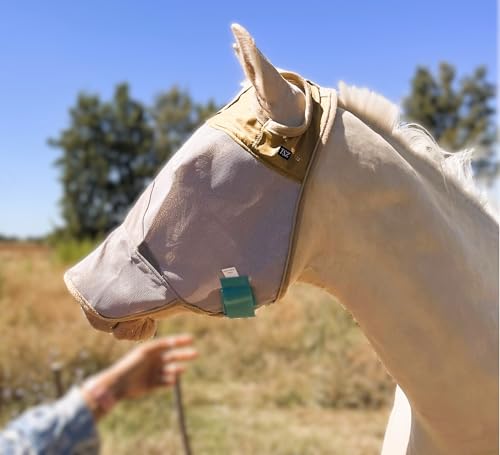
The Sunny Zebra Fleece-Padded UV Fly Mask
Soft fleece-padded mask with breathable mesh and adjustable straps for sensitive senior skin.

Animal-Gifts Fly Mask with Ears (Budget)
Affordable fine-mesh mask with ear coverage and UV protection for an easy backup or spare.
How Do These Fly Masks Compare?
| Fly Mask | Coverage | Notable Feature | Best For |
|---|---|---|---|
| Cashel Crusader (Ears) | Eyes + ears | Domed, eye-clearing shape | Everyday all-round use |
| Cashel Crusader Long Nose | Eyes + ears + nose | Muzzle coverage | Sunburn-prone noses |
| Harrison Howard Long Nose | Eyes + ears + nose | Large eye space, UV | Full-face protection value |
| Harrison Howard with Ears | Eyes + ears | Large eye space, UV | Comfort on a budget |
| TSZ Fleece-Padded | Eyes + ears | Soft fleece padding | Sensitive, rub-prone skin |
| Animal-Gifts Budget Mask | Eyes + ears | Low price, fine mesh | Spare or backup mask |
How We Picked These Fly Masks
This is a research-based comparison, not a wear trial. We looked at each mask's coverage, whether it protects the ears and extends over the nose, its stated UV protection, padding and anti-rub design, fit options across sizes, and the consistent patterns in verified owner reviews. We prioritized masks shaped to hold the mesh away from the eye, since contact with the eyeball causes irritation, soft edges to protect thin senior skin, and meaningful UV protection for sun-sensitive faces. We included both standard and long-nose styles plus a budget spare, because nearly every owner needs more than one mask in rotation. We make no medical claims and recommend a vet's input for horses with eye conditions.
A Closer Look at Each Fly Mask
Cashel Crusader Fly Mask with Ears
Cashel's Crusader is one of the most recognized fly masks for good reason, and it is our top pick for everyday senior use. The domed, dart-shaped construction holds the mesh well away from the eyes so it does not rub the eyeball, and the ear coverage protects sensitive ears from flies and gnats. It offers UV protection for the eyes and face, and the familiar design is easy to fit and clean. For a reliable, all-round mask to keep on an older horse through fly season, it is a dependable default.
Pros: Trusted design, eye-clearing domed shape, ear coverage, UV protection.
Cons: No nose coverage; mid-range price.
Cashel Crusader Fly Mask, Long Nose
For horses with pink, sunburn-prone muzzles or noses that flies torment, this long-nose Crusader extends the same trusted protection down over the bridge of the nose and muzzle. Older horses with light pigmentation around the nose are vulnerable to sunburn and the skin damage that repeated burning can cause, and the added coverage helps shield that delicate area. It keeps the eye-clearing shape and ear protection of the standard version. The longer flap collects a bit more debris, so daily checks and cleaning matter.
Pros: Protects a sunburn-prone nose, eye-clearing shape, ear coverage.
Cons: More debris collection; some horses dislike nose coverage at first.
Harrison Howard CareMaster Pro Long Nose
This long-nose mask offers full-face coverage with a large eye space and UV protection at a friendly price, making it a strong value choice for owners who want to shield the eyes, ears, and nose without paying premium money. The roomy eye area keeps mesh comfortably clear of the eyes, and the design aims for breathability through a warm day. For a senior that needs nose protection but whose owner is mask-shopping on a budget, it covers a lot of ground for the cost.
Pros: Full-face coverage, large eye space, UV protection, good value.
Cons: Long-nose styles need regular cleaning; fit varies by head shape.
Harrison Howard CareMaster Pro with Ears
The standard-nose sibling of the long-nose model gives eye and ear protection with the same large eye space and UV-blocking mesh, again at an accessible price. It suits the many seniors that need solid eye and ear coverage but not nose protection, and the generous eye room helps avoid contact irritation. As a budget-friendly comfort mask it is an easy one to keep several of in rotation, so a clean mask is always ready while another is being washed.
Pros: Comfortable large eye space, UV protection, affordable, easy to stock spares.
Cons: No nose coverage; budget materials may wear faster than premium masks.
The Sunny Zebra Fleece-Padded UV Fly Mask
Thin-skinned older horses with bony faces are especially prone to rubs, and this mask leans into comfort with soft fleece padding along the edges and breathable mesh. The padding cushions the points where a mask presses on the cheekbones and forehead, which can make the difference for a sensitive senior that has developed sores with stiffer masks. Adjustable straps help dial in a snug, non-slip fit. The fleece does need keeping clean, but for rub-prone horses the extra comfort is worth the upkeep.
Pros: Soft fleece padding for sensitive skin, breathable, adjustable fit.
Cons: Fleece holds dirt and needs regular washing.
Animal-Gifts Budget Fly Mask with Ears
Every horse owner ends up needing a spare mask, because they get lost, muddy, or torn at the worst moments. This affordable fine-mesh mask with ear coverage and UV protection is an easy way to keep a backup on hand without much outlay. It covers the basics of eye and ear protection for a senior, and at this price you can keep two or three so a clean one is always available. As a budget product it may not last as long as premium masks, but as a reliable spare it earns its place.
Pros: Very affordable, ear coverage, UV protection, great as a spare.
Cons: Less durable; basic construction without padding.
Getting the Most From a Fly Mask
A mask only helps a senior when it fits and is maintained. Keep these points in mind.
- Fit clear of the eyes. Choose a domed or darted shape so the mesh never touches the eyeball, and check that the horse can blink freely.
- Remove and inspect daily. Take the mask off each day to check the eyes and face for discharge, rubs, or debris, and to clean it.
- Keep spares in rotation. Masks get dirty and torn, so having a clean backup means your horse is never left unprotected.
- Match coverage to the horse. Add nose coverage for pink, sunburn-prone muzzles, and choose padded edges for thin-skinned, rub-prone seniors.
- Watch the eyes themselves. A mask protects but does not treat. Any squinting, swelling, discharge, or new growth around a senior's eye warrants a prompt vet exam.
A fly mask is protective gear, not medical treatment. Eye problems in older horses can worsen fast, so never use a mask in place of veterinary care for a sore or weepy eye. This guide is educational and complements, but does not replace, your veterinarian's advice.
Senior Horse Care Planner
Track your senior horse's vital signs, feed and body condition, farrier and dental schedule, medications, and quality of life, all in one printable planner.
Related Senior Horse Guides
Editor's Pick · Affiliate link
Cosequin ASU for the Older Horse
The joint supplement with the most research behind it in horses, combining glucosamine and chondroitin with avocado and soybean unsaponifiables. Worth starting before an older horse is visibly stiff rather than after.
Frequently Asked Questions
Why do senior horses especially benefit from a fly mask?
Older horses are often more vulnerable to the things a fly mask guards against. Many have eye conditions like uveitis or are prone to squamous cell carcinoma around the eyes, and a UV-blocking mask shields sensitive eyes from sun and irritation. Flies clustering at the eyes worsen weepy or infected eyes and can spread disease, and an older horse may be less able to keep them off with constant head movement. For seniors with pink skin around the eyes or a history of eye trouble, a mask is genuinely protective.
Do fly masks actually block UV rays?
Many quality fly masks provide meaningful UV protection, often advertised around 70 percent or higher for the mesh, which helps shield the eyes and surrounding skin from sun. This matters for horses with pink skin, light pigmentation, or eye conditions made worse by bright light, such as equine recurrent uveitis. UV blocking is not the same as total darkness, since horses can see through the mesh, but it reduces sun exposure to delicate tissues. Check the product's stated UV protection if sun sensitivity is your main concern.
Should I get a fly mask with or without a nose flap?
It depends on your horse's needs. A standard mask covers the eyes and usually the ears, which suits most horses and lets them graze and drink easily. A long-nose mask extends down to cover the muzzle and bridge of the nose, protecting pink-skinned noses prone to sunburn and shielding the nostrils from flies, which helps horses with facial sensitivity or sunburn-prone muzzles. Long-nose styles offer more coverage but can collect more debris, so match the style to whether your horse needs nose protection.
Can a horse wear a fly mask all day?
Most fly masks are designed for all-day turnout, but they should be removed and checked daily. Take the mask off at least once a day to inspect the eyes and face for rubs, debris, or discharge, and to make sure the mask is clean and not trapping dirt against the skin. Properly fitted masks let the horse see, graze, and drink. Remove a wet or muddy mask, since a dirty mask rubbing on the face can cause sores. Never leave a poorly fitting mask on a horse unsupervised for long periods.
How do I get the right fly mask size?
Fly masks come in sizes from miniature and foal through pony, cob or Arabian, horse or full, and extra-large or warmblood. Measure or estimate based on your horse's breed and head size, and check the brand's size chart, since fit varies. A good mask sits clear of the eyes with darts or a domed shape so the mesh does not touch the eyeball, fits snugly enough not to slip or let flies in, but not so tight that it rubs. Seniors with changed head shape should be fitted rather than assumed.
How do I keep a fly mask from rubbing my horse's face?
Look for masks with soft fleece or padding along the edges, especially at the forehead and where the mask meets the cheeks, and make sure the fit is snug but not tight. Keep the mask clean, since caked dirt is a major cause of rubs, and rotate to a spare while one is washed. Check for early signs of rubbing at the cheekbones and over the nose daily. Older horses with thin skin and bony faces are more prone to rubs, so padded styles and attentive daily checks help a lot.
Need more help with your senior horse?
Browse our guides by topic to find practical solutions.
Wellness Planner: $39