Best Senior Horse Feed 2026: Top Picks Compared
Compare 6 senior horse feeds for 2026: complete feeds, low-starch options, and ration balancers for older horses with poor teeth, weight loss, or metabolic needs.
Feeding an older horse is rarely about a single bag of feed. It is about matching the diet to a body that has changed: worn teeth that struggle with long-stem hay, a slower gut, a tendency to lose topline, and sometimes a metabolic condition like PPID (Cushing's) or insulin dysregulation. The right senior feed can be the difference between a horse that drops weight every winter and one that holds a healthy condition into its late 20s and beyond.
We compared widely available senior horse feeds using their published guaranteed analysis, fiber and fat content, starch and sugar levels, and the situations each formula is built for, from complete feeds that replace hay to ration balancers for easy keepers. We did not run our own barn trials. This is a research-based guide, and the single most important step is a conversation with your veterinarian, who can weigh your horse's teeth, body condition score, and any metabolic testing before you settle on a feed.
Best Senior Horse Feeds for 2026

Kent / Blue Seal Sentinel Senior SR Low Sugar Low Starch
Controlled-starch complete senior feed built for older horses with poor teeth or metabolic concerns.

Purina Enrich Plus Senior Ration Balancer
Low-calorie ration balancer that adds vitamins, minerals, and protein for easy-keeper seniors on good hay.
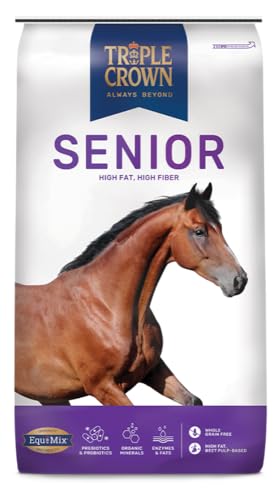
Triple Crown Triple Crown Senior High-Fat Complete Feed
High-fat, high-fiber complete feed designed to put and keep weight on hard-keeping older horses.

Purina Active Senior Horse Feed (Pelleted)
Pelleted senior feed for still-active older horses, easy to chew and soak into a mash.
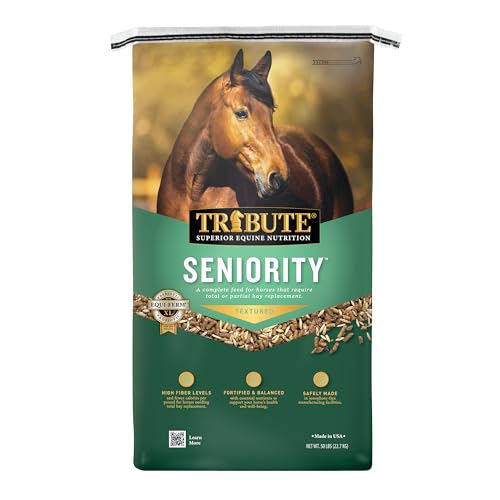
Kalmbach Feeds Tribute Maturity Textured Senior Feed
Textured senior formula with quality protein and fat for topline and condition in older horses.

Triple Crown Triple Crown Senior Gold Premium Feed
Premium high-calorie textured senior feed for hard keepers and seniors needing weight gain.
How Do These Senior Feeds Compare?
| Feed | Type | Form | Best For |
|---|---|---|---|
| Sentinel Senior SR Low Starch | Complete, low-NSC | Pelleted | Metabolic or poor-teeth seniors |
| Purina Enrich Plus | Ration balancer | Pelleted | Easy keepers on good hay |
| Triple Crown Senior | Complete, high-fat | Textured | Hard keepers needing weight |
| Purina Active Senior | Complete | Pelleted | Active older horses |
| Tribute Maturity | Complete | Textured | Topline and condition |
| Triple Crown Senior Gold | Complete, premium | Textured | Maximum weight gain |
How We Picked These Feeds
This is a research-based comparison, not a feeding trial. We read each product's guaranteed analysis and feeding directions, looked at fiber, fat, and starch levels, considered whether the feed is a complete forage replacer or a balancer meant to top-dress hay, and weighed the consistent themes in verified owner reviews. We deliberately included a range of types, because there is no single best senior feed. The hard keeper with worn teeth and the round easy keeper with insulin issues need almost opposite products. We favored established equine feed brands, clear feeding charts, and formulas that map cleanly onto a common senior need. We make no medical claims, and we recommend choosing a feed with your veterinarian, especially for metabolic horses.
A Closer Look at Each Feed
Blue Seal Sentinel Senior SR Low Sugar Low Starch
This is our top pick because it solves the two most common senior problems at once: it is a complete feed that can replace hay for a horse with worn teeth, and it is formulated to keep starch and sugar low for horses with PPID, insulin dysregulation, or a laminitis history. The pellets soak readily into a mash, which suits older mouths and reduces choke risk. For the large population of seniors who are both dentally compromised and metabolically sensitive, this controlled-starch complete feed is a sensible starting point to discuss with your vet.
Pros: Low NSC, complete forage replacer, soakable, supports metabolic seniors.
Cons: Not the highest-calorie option for an extreme hard keeper.
Purina Enrich Plus Senior Ration Balancer
Not every old horse needs a calorie-dense feed. The easy keeper that stays round on hay alone still needs vitamins, minerals, and quality amino acids for topline and immune health, and a ration balancer delivers exactly that in a small daily serving. Enrich Plus is fed at only a pound or two per day, so it fills nutritional gaps without the starch and calories of a full feed. For metabolic-prone seniors that hold weight easily, this is often the smartest, leanest way to balance the diet.
Pros: Low calorie, concentrated nutrition, ideal for easy keepers, small serving size.
Cons: Not a forage replacer; provides little weight support for thin horses.
Triple Crown Senior High-Fat Complete Feed
For the classic hard keeper that melts away every winter, this high-fat, high-fiber complete feed is built to add and hold condition. The fat provides calm, cool calories without relying on starch, and the generous built-in fiber means it can stand in for hay when teeth fail. Owners of underweight seniors frequently reach for this type of feed when good hay and a balancer are not enough. As a complete feed, it is fed in larger daily amounts, so split it into several meals.
Pros: High fat for weight gain, high fiber, complete forage replacer, widely trusted.
Cons: Calorie density is too much for easy keepers; fed in large amounts.
Purina Active Senior Horse Feed
Plenty of horses stay genuinely active into their senior years, still hacking out, doing light arena work, or packing kids around. This pelleted senior feed targets that horse, supplying digestible energy and senior-appropriate nutrition in a form that is easy to chew and simple to soak. It bridges the gap between a maintenance senior diet and a performance feed for the old campaigner that is far from retired. Adjust the amount to your horse's workload and body condition.
Pros: Suits active seniors, easy-chew pellets, soakable, established brand.
Cons: Less specialized for metabolic or extremely thin horses.
Kalmbach Tribute Maturity Textured Senior Feed
Topline loss is one of the most visible signs of aging, and quality protein with the right amino acid profile is central to maintaining it. This textured senior formula pairs digestible fiber and fat with a focus on protein quality, aiming to support muscle and overall condition in the older horse. The textured form is palatable for finicky seniors, and it can be soaked for those that need it. It is a solid all-around maintenance choice for the aging horse that is holding up reasonably well.
Pros: Protein focus for topline, palatable texture, well-rounded senior nutrition.
Cons: Textured feeds can be harder for the worst teeth unless soaked.
Triple Crown Senior Gold Premium Feed
When a senior needs the maximum help to gain, this premium textured feed brings extra calories and a fortified nutrient package aimed at weight gain and condition in mature and performance horses. It is the step up from a standard senior feed for the very thin old horse, the one recovering from illness, or the hard keeper that needs every advantage. Premium feeds cost more per bag, so it is worth confirming with your vet that calories, not an underlying problem like dental disease or PPID, are the real issue first.
Pros: High calorie for serious weight gain, fortified, palatable texture.
Cons: Highest price; overkill for horses that hold weight well.
Building a Real Feeding Plan for Your Senior Horse
The bag is only one part of feeding an older horse well. The most reliable results come from a plan your vet and, where relevant, your farrier help shape.
- Start with the teeth. An annual or twice-yearly dental exam tells you whether your horse can still chew hay. Quidding and dropping feed are signs you may need a complete or soaked feed.
- Score body condition monthly. Use the Henneke 1 to 9 scale and aim for a 4 to 6. Trends matter more than a single number, so track it through the seasons.
- Protect the metabolic horse. For PPID or insulin dysregulation, keep non-structural carbohydrates low and confirm hay and feed choices with your vet, since the feet depend on it.
- Change feed gradually. Transition over 7 to 10 days to protect the hindgut and reduce colic risk.
- Always provide forage or a replacer. A horse that cannot chew hay still needs the fiber, which is why complete feeds and soaked mashes matter so much in old age.
No feed replaces veterinary care. Persistent weight loss, sudden appetite changes, or signs of laminitis warrant a call to your vet, not just a bigger scoop. This guide is educational and is meant to complement, not replace, professional advice.
Senior Horse Care Planner
Track your senior horse's vital signs, feed and body condition, farrier and dental schedule, medications, and quality of life, all in one printable planner.
Editor's Pick · Affiliate link
Cosequin ASU for the Older Horse
The joint supplement with the most research behind it in horses, combining glucosamine and chondroitin with avocado and soybean unsaponifiables. Worth starting before an older horse is visibly stiff rather than after.
Frequently Asked Questions
When should I switch my horse to a senior feed?
There is no fixed birthday for it. Switch when your horse shows the signs that a senior diet is built for: dropping weight despite good hay, dental wear that makes long-stem forage hard to chew (quidding or dropping balls of hay), or a vet diagnosis like PPID. Many horses do well on a regular ration into their early 20s, while others need a senior feed by 15. Let body condition, dental exams, and your vet guide the timing rather than age alone.
What makes a complete senior feed different from regular grain?
A complete senior feed includes enough built-in fiber that it can partly or fully replace long-stem hay for a horse that can no longer chew forage. Regular grain or a ration balancer is meant to sit on top of good hay or pasture. Complete feeds are usually softer, often soakable into a mash, and are fed at much higher daily amounts, frequently 10 to 15 pounds or more, while a balancer is fed at only 1 to 2 pounds. Always read the feeding directions, since the right amount differs hugely between the two.
My senior horse is an easy keeper. Does it still need senior feed?
Often not in the complete-feed sense. An easy keeper that holds weight well usually needs vitamins, minerals, and quality protein without many extra calories. A ration balancer like Purina Enrich Plus delivers that in a small daily serving without the starch and calories of a full feed. Pouring pounds of calorie-dense senior feed into a horse that is already round can worsen weight and metabolic problems, so match the product to the body, not just the age.
Should I soak my senior horse's feed?
Soaking is helpful for horses with poor teeth, a history of choke, or those that bolt their feed. Most complete senior feeds are designed to soak into a soft mash within 10 to 20 minutes, which makes them easier to chew and swallow and adds water to the diet. Soaking also lets you stretch a meal and hide supplements or medication. Horses with good teeth do not need to soak, though many owners do it anyway in winter for hydration. Never leave soaked feed out long in heat, since it spoils quickly.
How much senior feed should I give per day?
It depends entirely on the product and whether your horse still eats hay. A ration balancer is fed at roughly 1 to 2 pounds a day. A complete feed replacing forage may be fed at 1 to 1.5 percent of body weight, which is 10 to 15 pounds for a 1,000-pound horse, split into several meals. Always follow the bag's feeding chart for your horse's weight and forage situation, divide large amounts into multiple meals, and make any change gradually over 7 to 10 days to protect the gut.
Is low-starch feed better for senior horses?
It is essential for seniors with PPID (Cushing's), equine metabolic syndrome, insulin dysregulation, or a laminitis history, where keeping non-structural carbohydrates (NSC) low protects the feet and metabolism. A healthy senior with no metabolic issues does not strictly need a low-starch feed, though many low-NSC senior diets are excellent all-around choices. If you are unsure of your horse's metabolic status, ask your vet about testing insulin and ACTH before choosing, since the right answer changes the whole feed plan.
Need more help with your senior horse?
Browse our guides by topic to find practical solutions.
Wellness Planner: $39