Hay Types Compared: Timothy vs Orchard vs Alfalfa
Compare timothy, orchard grass, alfalfa, teff, and grass-legume mixes for senior horses on protein, calcium, NSC, and which suits different older horses.
Quick answer: Grass hays (timothy, orchard, brome) are moderate in protein and calories and make a good base for most senior horses. Alfalfa is high in protein, calcium, and calories, ideal for thin seniors and hard keepers but too rich as the sole forage for easy keepers. Teff often runs lower in NSC, useful for metabolic horses. Any hay can vary widely in sugar, so test forage for PPID or EMS horses and aim for under 10 to 12 percent NSC. For worn teeth, soaked hay cubes or pellets replace long-stem hay. The values below are typical ranges only.
Hay Types Compared
The table gives typical, approximate values for common hays and notes on which seniors they suit. Actual protein, calcium, and NSC vary substantially by cutting, maturity, soil, and growing conditions, so treat these as orientation figures and test your hay when sugar content matters.
| Hay Type | Protein (approx.) | Calcium | NSC Tendency | Best For (Senior Notes) |
|---|---|---|---|---|
| Timothy (grass) | ~8 to 11% | Moderate | Variable, often moderate | Reliable base hay; soft later cuttings suit older teeth |
| Orchard grass | ~10 to 13% | Moderate | Variable, often moderate | Soft and palatable; good for picky or easy-keeper seniors |
| Alfalfa (legume) | ~15 to 20% | High | Often moderate but calorie-dense | Thin seniors, hard keepers, ulcer buffering; too rich alone for easy keepers |
| Teff (grass) | ~8 to 12% | Moderate | Often lower (test to confirm) | Metabolic and laminitis-prone seniors; soft and palatable |
| Grass / legume mix | ~10 to 15% | Moderate to high | Variable | Balances calories and protein; common all-purpose senior forage |
| Mature coarse grass hay | ~6 to 9% | Low to moderate | Often lower | Low-calorie option for easy keepers; can be hard to chew for poor teeth |
In short, grass hays anchor most senior diets, alfalfa adds protein and calories where a horse needs to gain, teff helps the metabolic crowd, and mixes split the difference. Maturity matters as much as type: leafy, earlier-cut hay is softer and more nutritious, while coarse, stemmy hay is lower in calories but harder to chew.
Timothy Forage Options for Senior Horses
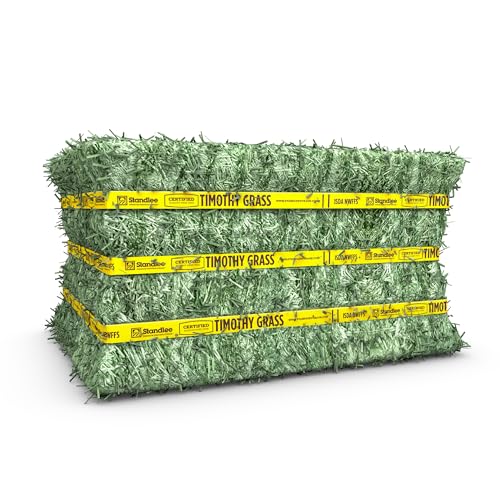
Standlee Certified Timothy Grass Compressed Hay Bale
Clean, consistent timothy forage, a soft moderate-NSC base for many senior horses.
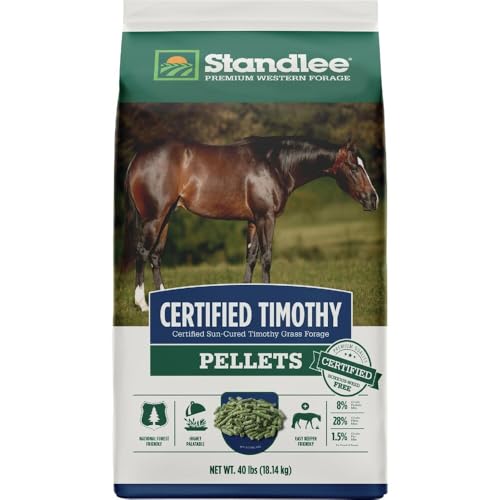
Standlee Certified Timothy Pellets
Soakable timothy pellets that replace long-stem hay for horses with worn teeth.
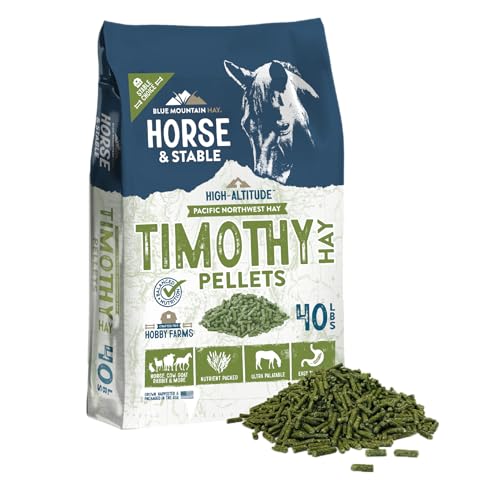
Blue Mountain Hay High Altitude Timothy Hay Pellets
Pelleted timothy forage you can soak into a soft mash for senior dental cases.
Matching Hay to the Horse
The right hay starts with the horse's body condition. A thin senior or hard keeper who struggles to hold weight benefits from higher-calorie, higher-protein forage, where alfalfa or an alfalfa-grass mix shines. An easy keeper or a metabolic horse needs the opposite: lower-calorie, tested low-NSC grass hay, often timothy, teff, or mature grass hay, fed in controlled amounts. Use the Henneke body condition score to judge where your horse sits and adjust forage accordingly.
The NSC Question for Metabolic Seniors
For a horse with PPID, EMS, or insulin dysregulation, the sugar content of the hay matters more than the type, because forage is the bulk of the diet. No hay is safe by name alone; even grass hay can test high. The only reliable approach is a forage analysis, aiming for NSC under about 10 to 12 percent. Soaking a borderline hay in clean water can leach out some sugar. Teff and mature grass hays are reasonable starting points, but testing is what confirms safety.
When Teeth Fail: Replacing Long-Stem Hay
Many seniors reach a point where worn, missing, or painful teeth make long-stem hay impossible to chew safely, signaled by quidding (dropping balls of half-chewed hay), weight loss, or choke. At that stage the forage itself does not change in importance, only its form. Soaked hay cubes, hay pellets, chopped hay, or a complete senior feed deliver the same fiber in a chewable, swallowable form. A dental exam tells you when to make the switch, and your vet can help match the replacement to the horse.
Smaller grazers follow the same rules. If a house rabbit shares your hay supply, our sister site compares hay types for rabbits, where the grass-versus-alfalfa logic will look familiar.
Related Reading
- Horse Feeding Chart by Weight - How much forage to feed each day.
- NSC Values in Horse Feeds - The sugar concept behind metabolic-safe forage.
- Henneke Body Condition Score Chart - Scoring condition to pick the right hay.
- Horse Age by Teeth Chart - Why aging teeth change what a horse can chew.
This chart is educational and does not replace your veterinarian or equine nutritionist. Nutrient and NSC values are approximate and vary by cutting; test your forage when sugar content matters.
Editor's Pick · Affiliate link
Cosequin ASU for the Older Horse
The joint supplement with the most research behind it in horses, combining glucosamine and chondroitin with avocado and soybean unsaponifiables. Worth starting before an older horse is visibly stiff rather than after.
Frequently Asked Questions
What is the best hay for a senior horse?
There is no single best hay; it depends on the horse. A good-quality, soft, leafy grass hay like timothy or orchard grass suits many seniors because it is moderate in protein and calories and easy to chew. Horses needing more condition or protein may benefit from some alfalfa, while metabolic horses need tested low-NSC forage. The right choice balances the horse's body condition, dental health, and any conditions like PPID or EMS. Your vet or nutritionist can help you decide.
Is alfalfa good or bad for senior horses?
Alfalfa is neither simply good nor bad; it is a high-protein, high-calcium, calorie-dense legume hay. It can be excellent for thin seniors or hard keepers who need to gain weight and for buffering stomach acid, and it is often more digestible than mature grass hay. The downsides are excess calories for easy keepers, a calcium-to-phosphorus imbalance if fed as the only forage, and richness that does not suit every horse. Many owners feed a grass hay base with some alfalfa.
Which hay is lowest in sugar for a metabolic horse?
Mature grass hays such as timothy, orchard, and brome tend to run lower in NSC than immature, lush, or stressed forage, but the only way to know is a forage analysis, since values vary widely by cutting and growing conditions. Teff is often promoted as a lower-NSC option. Whatever the type, a metabolic horse needs hay tested under about 10 to 12 percent NSC, and soaking can lower a borderline batch. Never assume a hay type is safe by name alone.
What hay is easiest to chew for a horse with bad teeth?
Soft, leafy, fine-stemmed hay is easiest, and second or later cuttings are usually softer than coarse first cuttings. For horses with significant dental loss, quidding, or missing teeth, long-stem hay of any type may become impossible to chew safely, raising choke and weight-loss risk. In those cases vets often recommend chopped hay, soaked hay cubes or pellets, or a complete senior feed as a forage replacement. A dental exam guides the right approach.
How does orchard grass compare to timothy?
Orchard grass and timothy are both popular cool-season grass hays with broadly similar moderate protein and calories. Orchard grass tends to be a bit softer and often higher yielding, which can make it more palatable and sometimes slightly higher in protein, while good timothy is prized for consistent quality and is widely available. For most seniors either works well. The deciding factors are usually local availability, quality of the specific cutting, and the individual horse's preference.
What is teff hay and why is it used for senior horses?
Teff is a warm-season annual grass hay that has become popular for metabolic and easy-keeper horses because well-managed teff can be lower in NSC than many other hays. It is typically soft and palatable. As with any forage, NSC still varies with growing and harvest conditions, so it must be tested rather than assumed safe. Teff can be a useful tool for laminitis-prone seniors, ideally chosen and tested with input from your vet or equine nutritionist.
How much hay should a senior horse eat per day?
As a baseline, horses eat roughly 1.5 to 2 percent of their body weight in forage daily, so about 15 to 20 pounds of hay for a 1,000-pound horse, adjusted for body condition and workload. Thin seniors may need more or higher-calorie forage, while easy keepers need controlled amounts. Horses who cannot chew long-stem hay get the equivalent in soaked cubes, pellets, or complete feed. Weigh your hay and monitor body condition, adjusting with your vet's guidance.
Need more help with your senior horse?
Browse our guides by topic to find practical solutions.
Wellness Planner: $39