Best Hay Alternatives for Senior Horses (2026)
The best hay alternatives for senior horses: hay pellets, cubes, chopped forage, and beet pulp compared on chewability, calories, and sugar for older horses with poor teeth.
When an older horse can no longer chew long-stem hay, the solution is not to feed less forage but to feed it in a different form. Hay alternatives like pellets, cubes, chopped forage, and beet pulp deliver the same fiber the hindgut depends on, just ground, compressed, or shredded into something a worn mouth can manage. Most are soaked into a soft mash that is easy to gum and far safer against choke.
Below are our research-based picks across the main categories of forage replacement, chosen from product specs, ingredient panels, and verified owner reviews rather than any barn trial. The right choice depends on your horse's teeth, weight, and any metabolic concerns, so use this as a menu and confirm your plan with your veterinarian.
Best Hay Alternatives for Senior Horses
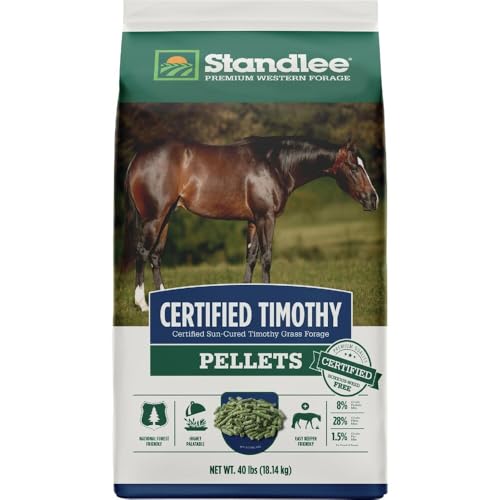
Standlee Certified Timothy Hay Pellets
Grass-hay pellets that soak into a clean, measurable mash
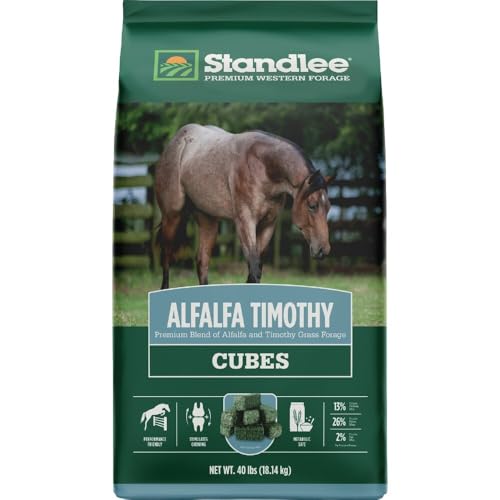
Standlee Alfalfa & Timothy Hay Cubes
Compressed forage cubes that soak soft for hard keepers


British Horse Feeds 95% Sugar-Free Beet Pulp
Quick-soaking, low-sugar beet pulp for laminitis-prone horses
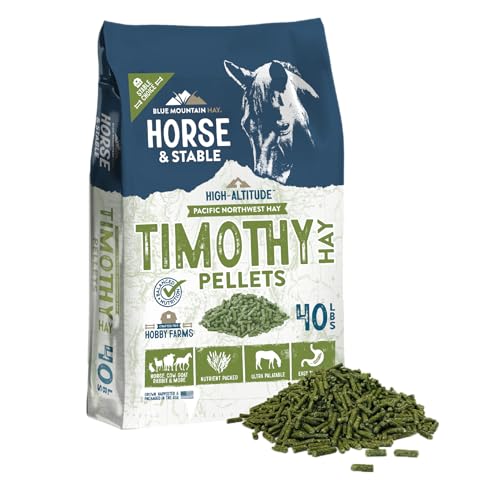
Blue Mountain Hay High Altitude Timothy Pellets
Low-dust, quick-soaking timothy pellets for forage replacement
How We Chose These Hay Alternatives
We did not run a feeding trial. Instead, we compared products on what matters for an older horse: how well they soak into a chewable mash, their fiber and calorie profile, sugar and starch content for metabolic horses, dust level for respiratory health, and patterns in verified owner reviews. We aimed to cover the full menu, from low-calorie grass pellets to richer alfalfa cubes and safe-calorie beet pulp, so you can match the alternative to your horse rather than to a single product.
Comparison at a Glance
| Alternative | Type | Best For | Approx. Price |
|---|---|---|---|
| Standlee Timothy Pellets | Grass hay pellets | Everyday forage replacement | Check price |
| Standlee Alfalfa & Timothy Cubes | Hay cubes | Hard keepers needing calories | $41.49 |
| Standlee Beet Pulp Shreds | Beet pulp | Safe calories and digestible fiber | $32.99 |
| Standlee Alfalfa Chopped Hay | Chopped forage | Horses with partial dentition | $44.99 |
| Speedi-Beet | Low-sugar beet pulp | Laminitis-prone metabolic horses | $69.98 |
| Blue Mountain Timothy Pellets | Grass hay pellets | Low-dust, quick-soaking mashes | $44.99 |
Hay Pellets: The Workhorse Replacement
Hay pellets are ground hay compressed into small pellets, and they are the most popular full forage replacement for senior horses. Soaked 15 to 30 minutes in warm water, they fluff into a soft mash that even a toothless horse can gum. They are clean, easy to weigh, low in dust, and available in grass varieties like timothy for everyday feeding or alfalfa for added calories. To replace hay, feed the same weight of pellets you would feed in hay, divided across several meals.
Hay Cubes: Forage in Compressed Form
Hay cubes are larger, coarser compressed forage. They carry the same value as pellets but must be soaked thoroughly for senior horses, because dry cubes are a real choke risk for a worn mouth. Once soaked soft, they make an excellent forage base. Alfalfa and alfalfa-blend cubes are calorie- and protein-rich, which helps hard keepers and topline, while timothy cubes are a lighter everyday option.
Beet Pulp: Safe Calories and Fiber
Beet pulp is a standout for senior horses because it is highly digestible, low in sugar and starch when unmolassed, and a good source of both fiber and calories. It soaks into a soft, palatable mash that most horses love. It is especially valuable for hard keepers who need extra energy without the metabolic risk of grain, and unmolassed versions suit many horses with PPID or insulin issues. Choose plain or low-sugar beet pulp, soak it well, and introduce it gradually.
Chopped Forage: For Partial Dentition
Chopped forage is hay cut into short lengths. It sits between long-stem hay and a full mash, and it suits seniors that still have some grinding ability but struggle with full-length hay. It keeps more of the chewing and foraging behavior that horses enjoy. For a fully toothless horse, though, pellets and cubes soaked soft are usually the safer choice.
Hay Alternative Quick Links
- Standlee Timothy Hay Pellets - everyday forage replacement
- Standlee Beet Pulp Shreds - safe calories and digestible fiber
- Browse hay cubes and pellets on Amazon
Building the Right Mix
Most senior diets use a combination rather than a single product. A common, effective base is soaked grass hay pellets or cubes for the bulk of the forage, plus beet pulp for extra safe calories, topped with a complete senior feed or a ration balancer to cover vitamins and minerals. Transition onto any new forage gradually over one to two weeks, keep total forage intake at roughly 1.5 to 2 percent of body weight, and let body condition guide whether you lean toward richer alfalfa or lighter grass options.
The Bottom Line
The best hay alternative is the one that fits your horse's teeth, weight, and metabolism. Soaked hay pellets and cubes can replace hay outright, beet pulp adds safe calories, and chopped forage helps horses with partial dentition. Build a forage-first mix, soak everything for older mouths to prevent choke, transition slowly, and balance the diet with a feed or balancer. As always, your veterinarian can help you tune the amounts for your individual senior.
Related Guides
- Feeding a Horse With No Teeth - Building a full mash diet for toothless seniors.
- Best Senior Horse Feed - Complete feeds to pair with forage replacements.
- Feeding a Cushing's Horse - Low-sugar forage choices for metabolic horses.
Senior Horse Care Planner
Track your senior horse's vital signs, feed and body condition, farrier and dental schedule, medications, and quality of life, all in one printable planner.
Editor's Pick · Affiliate link
Cosequin ASU for the Older Horse
The joint supplement with the most research behind it in horses, combining glucosamine and chondroitin with avocado and soybean unsaponifiables. Worth starting before an older horse is visibly stiff rather than after.
Frequently Asked Questions
What are the best hay alternatives for a senior horse?
The main hay alternatives are hay pellets, hay cubes, chopped forage, and beet pulp, often used together. Hay pellets and cubes replace long-stem hay almost directly when soaked, beet pulp adds highly digestible fiber and safe calories, and chopped forage suits horses with partial dentition. The right mix depends on your horse's teeth and weight. Many seniors do best on soaked pellets or cubes plus beet pulp.
Do hay pellets and cubes fully replace hay?
Yes, soaked hay pellets and cubes can replace long-stem hay pound for pound as the forage portion of the diet. They are made from the same grasses, just ground and compressed. For a horse that can no longer chew hay, you feed the same 1.5 to 2 percent of body weight in soaked pellets or cubes that you would in hay, divided across several meals. Add a balancer or complete feed to cover nutrients.
Should hay cubes and pellets be soaked?
For senior horses with poor teeth, yes, always soak. Dry cubes and pellets can cause choke in horses that bolt feed or cannot chew well. Soaking 15 to 30 minutes in warm water turns them into a soft mash that is easy to swallow and adds water to the diet. Horses with full, healthy teeth can sometimes eat them dry, but soaking is the safer default for any older horse.
Is beet pulp safe for horses with metabolic issues?
Generally yes. Plain beet pulp is low in sugar and starch, which makes it a good fiber and calorie source for many horses with PPID or insulin dysregulation. Choose unmolassed beet pulp, and rinse and soak it to further reduce any residual sugar. Always confirm with your vet for a diagnosed metabolic horse, and avoid molassed versions, which add the sugar you are trying to limit.
Alfalfa or grass hay alternatives for seniors?
It depends on the horse. Alfalfa pellets and cubes are higher in calories, protein, and calcium, which helps thin hard keepers and supports topline, but they may be too rich for easy keepers or some metabolic horses. Grass options like timothy are lower in calories and a safer everyday base. Many owners blend the two. Match the choice to your horse's weight, workload, and any health conditions.
How do I switch my horse from hay to a hay alternative?
Transition gradually over one to two weeks, replacing a portion of the hay with soaked pellets, cubes, or beet pulp and increasing it every few days. A sudden forage change can upset the hindgut and raise colic risk. Keep total forage intake the same by weight, split meals into several feedings, and watch manure and appetite as you go. Your vet can help set the right pace and amounts.
Need more help with your senior horse?
Browse our guides by topic to find practical solutions.
Wellness Planner: $39