Hoof Care for Senior Horses: A Complete Guide
How to keep an older horse's hooves healthy: trimming schedules, daily picking, common senior hoof problems, nutrition, and when to call the vet or farrier.
The old saying "no hoof, no horse" never matters more than in the senior years. As a horse ages past fifteen, hoof quality, circulation, and the joints above the hoof all change, and small problems that a younger horse would shrug off can leave an older horse sore and reluctant to move. Good hoof care for a senior is not complicated, but it is steady, hands-on work: regular farrier visits, daily picking, a balanced diet, and a sharp eye for the early signs of trouble.
This guide walks through what changes in the aging hoof, the problems seniors face most often, and the simple routine that keeps your horse sound and comfortable. None of it replaces your own farrier and equine veterinarian, who know your horse's feet better than any article can. Think of this as the framework that helps you ask better questions and catch issues early.
Senior Hoof Care Essentials
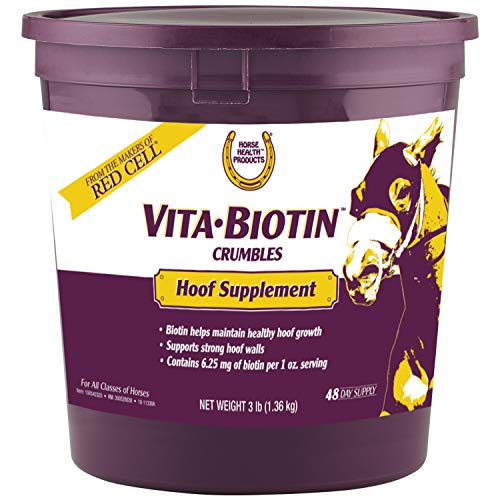
Horse Health Vita Biotin Crumbles Hoof Supplement
Biotin crumble that supports hoof wall growth and strength in older horses.

Tough 1 Great Grip Hoof Pick and Brush
Simple daily pick and brush for clearing packed dirt and checking for thrush.

Absorbine Hooflex All Natural Conditioner
Hoof dressing to balance moisture in dry or cracked senior hooves.
How the hoof changes with age
The hoof grows from the coronary band down at roughly a quarter inch per month in a healthy adult, and that rate tends to slow slightly in old age. Slower growth means a chip or crack takes longer to grow out and disappear, so prevention matters more than ever. Circulation to the foot can also decline, and the hoof relies heavily on movement to pump blood through it. A retired senior who stands more and moves less may have cooler, slower-growing feet as a result.
Older horses frequently carry some degree of arthritis in the knees, fetlocks, hocks, or coffin joints. When a horse loads a limb unevenly to spare a sore joint, the hoof wears and grows unevenly too. This is why a balanced trim, one that keeps the foot landing flat and level, does as much for the joints above as it does for the hoof itself. Hoof care and joint care are deeply connected in the senior horse.
Common hoof problems in older horses
Several conditions show up more often as horses age. Knowing the signs helps you act before a minor issue becomes a lameness.
Thrush and white line disease
Thrush is a bacterial infection of the frog that thrives in wet, dirty footing and produces a black, foul-smelling discharge. White line disease is a separate fungal and bacterial invasion of the hoof wall. Both are more common in seniors who move less and stand in damp bedding. Daily picking and a clean, dry standing area prevent most cases, and topical treatments handle mild ones.
Cracks and brittle walls
Repeated wet and dry cycles, long trim intervals, and shortfalls of biotin, zinc, copper, or quality protein all weaken the hoof wall. In an older horse with a metabolic disease, poor hoof horn is sometimes the first visible clue. Cracks that reach sensitive tissue or cause lameness need a farrier's attention, not just a topical dressing.
Laminitis and founder
Laminitis, inflammation of the laminae that bond the hoof wall to the coffin bone, is one of the most serious threats to a senior horse. It is strongly linked to PPID (Cushing's disease) and equine metabolic syndrome, both common in older horses. Signs include a bounding digital pulse, heat in the feet, a shortened or "walking on eggshells" gait, and shifting weight or rocking back onto the heels. Laminitis is always an emergency. Call your vet immediately if you suspect it.
The daily and weekly routine
A consistent routine catches most hoof problems while they are still small and easy to fix.
- Pick out the feet daily. Clear packed dirt and manure, and run the pick along both sides of the frog where thrush hides. Daily handling also lets you feel for heat and notice tenderness early.
- Check the digital pulse. Learn where to feel the pulse at the back of the fetlock. A normally faint pulse that becomes strong and bounding is a red flag for inflammation or laminitis.
- Keep footing clean and dry. A dry place to stand prevents thrush and keeps walls from softening. Mud management around gates and feeders pays off.
- Stick to the farrier cycle. Book the next visit before the current one ends so the foot never gets long and out of balance.
Working with your farrier
Most senior horses do best on a four to six week trimming or shoeing cycle. Slower hoof growth is not a reason to stretch the interval, because an unbalanced foot stresses aging joints quickly. Tell your farrier about any arthritis, stiffness, or difficulty your horse has holding a foot up, since a comfortable older horse cooperates far better with frequent short breaks and a hoof stand. A patient farrier who lets a stiff senior rest a leg is worth their weight in gold.
| Sign | Possible cause | Action |
|---|---|---|
| Black, smelly frog | Thrush | Clean daily, dry footing, topical treatment |
| Bounding digital pulse, heat | Laminitis | Call vet immediately, restrict movement |
| Vertical or horizontal cracks | Dry walls, nutrition, long trim | Farrier assessment, review diet |
| Uneven wear, flares | Joint pain, imbalance | Farrier trim, vet for arthritis |
| Brittle, crumbly horn | Diet or metabolic disease | Hoof supplement, test for PPID |
Nutrition for healthy hooves
The hoof is built from the inside out, so what your horse eats today becomes the wall that grows over the next year. A balanced diet that supplies enough quality protein, biotin, zinc, copper, and methionine is the foundation. Many older horses on a forage-only diet benefit from a ration balancer that fills mineral gaps. A dedicated biotin hoof supplement can help horses with genuinely poor hoof quality, but it takes six to twelve months to show because it only improves new growth. For metabolic horses, keep sugar and starch low and work with your vet, since uncontrolled PPID or EMS will undermine even the best supplement.
Barefoot, shoes, or boots?
Many retired seniors are happiest barefoot on soft footing, where the hoof can flex and circulation improves. Horses with thin soles, chronic laminitis, or those still working on hard ground may need shoes or removable hoof boots for protection and comfort. Boots are a flexible middle ground, giving cushioning on rocky ground without permanent shoeing. Your farrier and vet can assess sole depth and comfort to choose what fits your individual horse.
Senior Horse Care Planner
Track your senior horse's vital signs, feed and body condition, farrier and dental schedule, medications, and quality of life, all in one printable planner.
When to call the vet versus the farrier
As a rule, call the farrier for trimming, balance, cracks, shoeing changes, and chronic thrush that is not improving. Call the vet for any sudden lameness, a strong digital pulse, heat in the foot, suspected laminitis or an abscess that is not draining, and for diagnosing the metabolic diseases behind so many senior hoof problems. The two professionals often work as a team, and the best outcomes come when your farrier and veterinarian communicate about your horse. Keeping detailed notes of what you see between visits gives them the information they need to keep your old friend sound.
Editor's Pick · Affiliate link
Cosequin ASU for the Older Horse
The joint supplement with the most research behind it in horses, combining glucosamine and chondroitin with avocado and soybean unsaponifiables. Worth starting before an older horse is visibly stiff rather than after.
Frequently Asked Questions
How often should a senior horse's hooves be trimmed?
Most older horses do best on a four to six week farrier cycle, the same as younger horses. Hoof growth slows a little with age, but slower growth does not mean longer intervals. Aging horses are more prone to flare, under-run heels, and uneven loading from arthritis, so a steady cycle keeps the hoof balanced and reduces strain on aging joints and tendons.
Do older horses get more hoof problems?
They tend to. Seniors are at higher risk for thrush, white line disease, cracks, and laminitis, partly because conditions like PPID (Cushing's) and EMS disrupt circulation and hoof quality. Reduced movement, weaker hoof walls, and slower healing all play a part. Daily picking, a consistent farrier schedule, and managing any metabolic disease are the best defenses.
Why are my senior horse's hooves suddenly cracking?
Cracks often come from dry and wet cycles, long trim intervals, poor nutrition, or an underlying metabolic problem. Biotin, methionine, zinc, and copper all support hoof wall quality, and a deficiency shows up as brittle, chipping walls over months. If cracking appears alongside increased drinking, a long coat, or laminitis, ask your vet to test for PPID.
Should I use a hoof supplement on my older horse?
A biotin-based hoof supplement can help horses with genuinely poor hoof quality, but it works slowly. Because the hoof grows roughly a quarter inch a month, it takes six to twelve months to grow out a full new wall. Supplements help most when the diet is already balanced for protein, zinc, and copper. Talk to your vet before adding one to a metabolic horse.
Can a senior horse go barefoot?
Many older horses are very comfortable barefoot, especially retired ones on soft footing. Barefoot allows the hoof to flex and can improve circulation. Horses with thin soles, chronic laminitis, or those worked on hard ground may need shoes or hoof boots for protection. Your farrier and vet can assess sole depth and comfort to decide what suits your horse.
How can I tell if my senior horse has hoof pain?
Watch for a shortened stride, reluctance to turn, shifting weight between feet, standing camped under, or increased lying down. A strong digital pulse and heat in the hoof are warning signs of inflammation or laminitis. Any horse that is suddenly lame, walking on eggshells, or rocking back onto the heels needs a vet promptly, as laminitis is an emergency.
Does cold weather affect senior horse hooves?
Yes. Frozen, rutted ground bruises soles and stresses aging joints, while wet winter footing softens hooves and feeds thrush. Mud packed in the hoof holds moisture against the frog. Pick feet daily, keep a clean dry area for your horse to stand, and ask your farrier about traction if your senior slips on ice.
Need more help with your senior horse?
Browse our guides by topic to find practical solutions.
Wellness Planner: $39