Best Horse Thrush Treatment: What Works and How to Use It
The best horse thrush treatment picks for older horses: liquids, drying powders, and copper sulfate gels, how to choose by foot type, and how to clear thrush for good.
The best horse thrush treatment for most cases is Durvet Thrush Rid, an inexpensive daily liquid that flows into the frog clefts, dries the area, and kills the bacteria behind the infection. For constantly wet feet, a drying powder like No Thrush works better, and deep, stubborn cases respond to a clinging copper sulfate gel.
Thrush is one of the most common hoof problems senior owners deal with, and the shelves are crowded with products that all promise to clear it. The truth is that several of them work well, and the better question is which format suits your horse's feet and your daily routine. Below we compare six well-regarded thrush treatments, from easy daily liquids to drying powders and clinging copper sulfate gels, so you can match the right one to a mild case, a stubborn deep cleft, or a foot that is constantly wet. Remember that no product wins against a hoof standing in wet manure, so pair any of these with dry footing, daily picking, and the routine in our step-by-step guide to thrush treatment for horses.
Top Thrush Treatments Compared
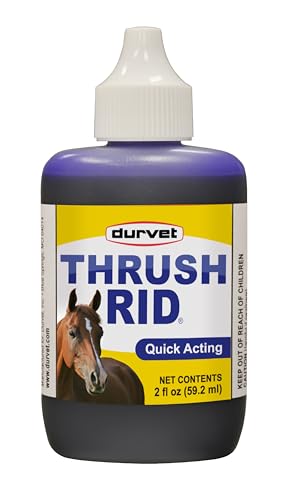
Durvet Durvet Thrush Rid for Horses
Classic daily liquid that dries the frog and kills the bacteria behind a smelly, blackened frog.
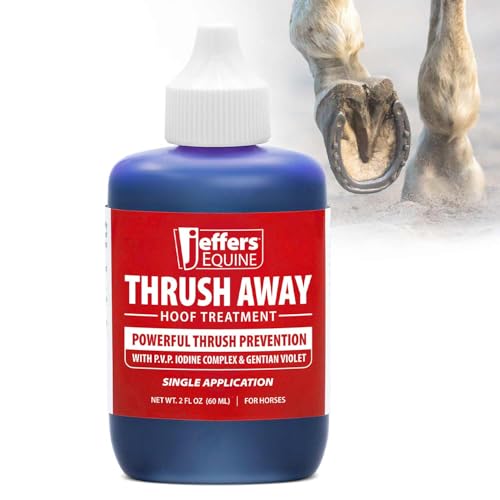
Jeffers Jeffers Equine Thrush Away Iodine Solution
Iodine-based solution for the frog, white line, and clefts of affected hooves.
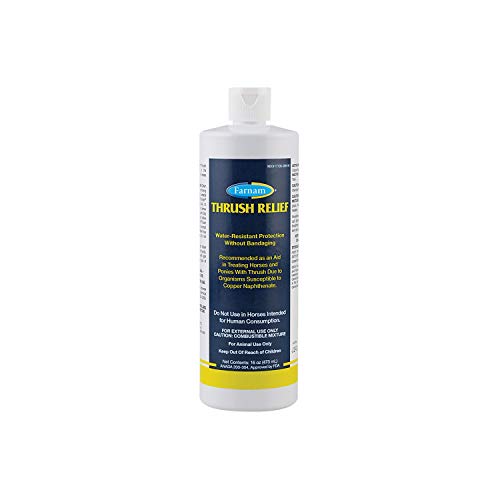
Long-trusted thrush aid that penetrates the frog clefts to fight infection in horses and ponies.

Four Oaks Farm No Thrush Dry Powder Treatment
Mess-free drying powder that suits very wet feet and clings in deep frog grooves.

Vetericyn Vetericyn Mobility Equine Hoof Care
Gentler option for sole and frog damage from thrush, formulated to be kind to healthy tissue.
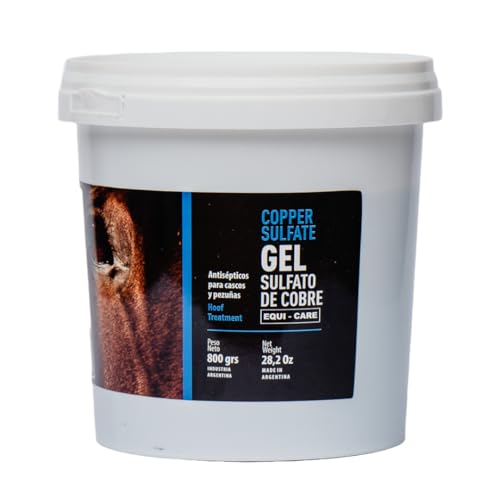
Equi-Care Equi-Care Copper Sulfate Hoof Gel
Clinging copper sulfate gel for stubborn, deep thrush that needs sustained contact.
How we chose
These picks are based on research into product formulations, the ingredients known to work against the bacteria behind thrush, manufacturer information, and patterns in verified owner reviews. We did not run a barn trial. Instead we looked at which products are widely trusted by horse owners and farriers, how each format suits different feet and conditions, and whether the formula balances effectiveness with safety for healthy frog tissue. We favored options that are easy to apply consistently, since consistency is what actually clears thrush. Always confirm a choice with your own farrier, who knows your horse's feet.
Comparing the top picks
| Product | Format | Best for | Price |
|---|---|---|---|
| Durvet Thrush Rid | Liquid | Everyday mild to moderate thrush | $14.49 |
| Jeffers Thrush Away | Iodine liquid | Frog, clefts, and white line | $14.99 |
| Farnam Thrush Relief | Liquid aid | Penetrating deep clefts | $28.84 |
| No Thrush Powder | Dry powder | Very wet feet, mess-free use | $16.69 |
| Vetericyn Mobility | Gentle solution | Tissue-friendly care | $17.99 |
| Equi-Care Copper Gel | Copper sulfate gel | Stubborn, deep cases | $29.99 |
The picks in detail
Durvet Thrush Rid is the classic daily liquid many owners reach for first. It is inexpensive, easy to apply into the frog clefts, and dries the area while it works on the bacteria. For mild to moderate thrush in a senior horse it is a sensible, no-fuss starting point.
Jeffers Equine Thrush Away uses iodine, a long-trusted antiseptic, and is marketed for the frog, white line, and clefts. The applicator makes it easy to direct into deep grooves, which is exactly where thrush hides.
Farnam Thrush Relief is a well-established aid designed to penetrate the frog clefts. It is a step up in price from the basic liquids but has a long reputation among owners and ponies prone to recurring thrush.
No Thrush Dry Powder takes a different approach. Because it is a powder, it helps dry the foot as it treats, which makes it a favorite for horses kept in wet conditions where liquids struggle to stay put. It is also clean and easy to apply.
Vetericyn Mobility appeals to owners who want a gentler option for sole and frog damage. It is formulated to be kind to healthy tissue, which suits sensitive seniors and feet that are already a bit raw.
Equi-Care Copper Sulfate Hoof Gel brings out a proven heavy hitter for stubborn cases. The gel base keeps copper sulfate in contact with the frog rather than running off, giving deep, persistent thrush the sustained treatment it needs.
Senior Horse Care Planner
Track your senior horse's vital signs, feed and body condition, farrier and dental schedule, medications, and quality of life, all in one printable planner.
Getting the best results
Whichever product you choose, the routine around it determines success. Clean the foot thoroughly, brush out the frog clefts, and dry the area before applying. Treat daily until the odor and discharge are gone, usually one to two weeks for mild cases. Most importantly, fix the environment: move the horse to clean, dry footing, manage mud around gates and feeders, and stay on a regular farrier cycle so the frog stays well trimmed and self-cleaning. For older horses that move less or have deep frog clefts, daily picking is your best preventive of all. Our guide to treating thrush step by step walks through the full cleaning, treating, and prevention routine. If thrush is painful, bleeding, or simply will not clear despite good care, call your farrier or vet rather than reaching for ever stronger chemicals.
Editor's Pick · Affiliate link
Cosequin ASU for the Older Horse
The joint supplement with the most research behind it in horses, combining glucosamine and chondroitin with avocado and soybean unsaponifiables. Worth starting before an older horse is visibly stiff rather than after.
Frequently Asked Questions
What is the best treatment for thrush in horses?
Durvet Thrush Rid is the best all-around thrush treatment for most horses: an inexpensive daily liquid that flows into the frog clefts, dries the area, and kills the bacteria behind the infection. For constantly wet feet a drying powder like No Thrush works better, and for deep, stubborn cases a clinging copper sulfate gel keeps the active ingredient in contact longer. Whichever product you pick, it only works alongside clean, dry footing and daily hoof picking.
What is the best thrush treatment for a senior horse?
The best treatment is the one you will apply consistently alongside dry footing, because environment matters more than any single product. Liquid solutions like Durvet Thrush Rid and iodine-based options reach deep into the frog clefts, while dry powders such as No Thrush suit very wet feet. Copper sulfate gels cling to stubborn cases. For a tissue-friendly option many owners like Vetericyn. Match the format to your horse's feet and your routine, and ask your farrier for input.
How quickly do thrush treatments work?
Mild thrush usually improves within one to two weeks of daily treatment, provided the foot is also kept clean and dry. You should notice less odor and discharge within the first several days. If there is no improvement after a couple of weeks of diligent care, or if the foot is painful or bleeding, stop guessing and call your farrier or vet, because a stubborn case may need the diseased frog trimmed or hide a deeper problem.
Are liquid or powder thrush treatments better?
Both work, and the right choice depends on the foot. Liquid solutions flow into the deep central and side clefts of the frog and are easy to apply daily, which suits most cases. Dry powders are useful when feet are constantly wet, since they help dry the area as they treat. Thicker gels and pastes cling longer and suit deep, stubborn pockets that need sustained contact. Many owners keep more than one format on hand.
Can I use a thrush treatment as a preventive?
The best prevention is daily picking and dry footing rather than routinely applying chemicals to healthy feet. That said, horses prone to thrush because of deep frog clefts or wet conditions may benefit from periodic use of a gentle treatment as part of their routine. Avoid harsh products on healthy tissue. If your senior keeps getting thrush, focus first on the environment and farrier care, then add a maintenance product if needed.
Is copper sulfate safe for treating thrush?
Copper sulfate is a long-used and effective ingredient against the bacteria behind thrush, and many commercial gels and sprays rely on it. It should be used as formulated for equine use rather than mixed up at random strength, because concentrated copper sulfate can irritate healthy tissue. Gels that hold it against the frog tend to work well on stubborn cases. As with any treatment, follow the label and ask your farrier if you are unsure.
When should thrush be seen by a vet instead of treated at home?
Treat mild thrush at home, but involve a professional when the horse is lame, the infection is deep enough to bleed, frog tissue is being destroyed, or thrush keeps returning despite good management. Your farrier can trim away diseased frog and advise on products, while your vet should examine painful or persistent cases that may point to a deeper issue. In a senior horse, do not let a worsening foot go unaddressed.
Need more help with your senior horse?
Browse our guides by topic to find practical solutions.
Wellness Planner: $39