Henneke Body Condition Score Explained
The Henneke body condition score rates a horse's fat from 1 to 9. Learn the six areas to assess, why 4 to 6 is ideal, and how to score your senior horse.
Quick definition: The Henneke body condition score is a 1 to 9 scale that rates how much fat a horse carries, from 1 (emaciated) to 9 (extremely obese), by feeling and looking at six body areas. Developed by Dr. Don Henneke in 1983, it is the standard tool for judging condition. Most horses are healthiest at a score of 4 to 6, with 5 considered ideal.
The Henneke body condition score takes the guesswork out of the question every owner asks: is my horse too thin, just right, or too fat? Instead of relying on a glance, it gives you a repeatable number based on how much fat you can actually feel.
For senior horses the scale is especially valuable, because aging horses drift to both extremes. One may waste away from worn teeth or PPID, while another packs on dangerous fat as an easy keeper. The Henneke score catches either direction early.
Tools for Tracking Condition

Tough 1 Tough 1 Horse Weight and Height Tape
Pairs with body condition scoring to track your horse's weight trend over time.

Konohan Konohan Horse Weight and Height Tape
A longer multifunctional tape for estimating both weight and height during routine condition checks.
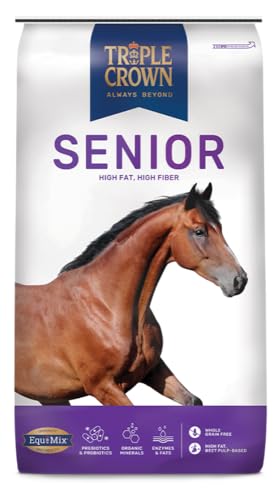
Bluebonnet Feeds Triple Crown Senior High Fat High Fiber Feed
A calorie-dense senior feed to help bring up a horse scoring too low on the Henneke scale.
The 1 to 9 Scale
Each score describes a level of fat coverage. The extremes are easy to recognize, while the middle of the scale takes a trained hand to separate one number from the next.
| Score | Condition | What You Feel |
|---|---|---|
| 1 | Poor / emaciated | Bones project sharply; no fatty tissue |
| 2 to 3 | Thin | Ribs and backbone easily visible |
| 4 | Moderately thin | Faint rib outline; slight tailhead fat |
| 5 | Ideal | Ribs not seen but easily felt; level back |
| 6 | Moderately fleshy | Spongy fat over ribs and tailhead |
| 7 to 8 | Fleshy to fat | Ribs hard to feel; crease down the back |
| 9 | Extremely fat | Bulging fat; deep crease; cresty neck |
The Six Areas You Assess
The Henneke method scores fat at six specific spots, then averages them into one number:
- Neck. How much fat and crest along the topline of the neck.
- Withers. Whether the withers are sharp or smoothed over with fat.
- Crease of the back. Whether the loin is level, ridged, or creased with fat.
- Ribs. How easily you can feel the ribs through the fat covering.
- Tailhead. Soft or firm fat around the dock.
- Behind the shoulder. Whether fat fills in smoothly behind the elbow.
How to Score Your Horse
Use your hands, not just your eyes. A thick winter coat or good muscling can hide both fat and ribs, so press firmly at each area and compare what you feel to the descriptions above. Do it every few weeks and write the number down. Trends matter more than any single reading, especially in a senior that can lose or gain quietly.
Pair the score with a weight tape. The tape tracks pounds, while the Henneke score tells you whether a change is healthy muscle or unwanted fat. For metabolic horses, also feel the neck crest specifically, since a horse can carry a dangerous crest at an otherwise moderate score.
Why the Target Is 4 to 6
A score of 4 to 6 balances having enough reserve without the laminitis and strain that come with obesity. A 5 is ideal for most horses. Seniors that are too thin, scoring 3 or below, need a careful feeding plan, which our guide to how much to feed a senior horse covers. Horses scoring 7 or above carry extra laminitis risk, especially with EMS. For the full visual reference, see our Henneke body condition score chart.
This page is educational and does not replace your veterinarian. If your horse is scoring well above or below the ideal range, work with a vet or equine nutritionist on a safe plan.
Senior Horse Care Planner
Track your senior horse's vital signs, feed and body condition, farrier and dental schedule, medications, and quality of life, all in one printable planner.
Editor's Pick · Affiliate link
Cosequin ASU for the Older Horse
The joint supplement with the most research behind it in horses, combining glucosamine and chondroitin with avocado and soybean unsaponifiables. Worth starting before an older horse is visibly stiff rather than after.
Frequently Asked Questions
What is the Henneke body condition score?
The Henneke body condition score is a standardized 1 to 9 scale that rates how much fat a horse carries, where 1 is emaciated and 9 is extremely obese. Developed by Dr. Don Henneke in 1983, it scores fat by feel and sight at six body areas, then averages them. It is the most widely used, objective way for owners and vets to judge whether a horse is too thin, ideal, or too fat.
What is the ideal Henneke score for a horse?
Most horses are healthiest at a Henneke score of 4 to 6, with 5 considered ideal for the average horse. A 5 means the ribs cannot be seen but are easily felt, the back is level, and fat is evenly distributed. Performance horses may sit slightly leaner, and some metabolic horses are kept toward the lower end of the range to reduce laminitis risk under veterinary guidance.
Which body areas does the Henneke system assess?
The Henneke method evaluates fat at six locations: along the neck, over the withers, down the crease of the back, behind the ribs, at the tailhead, and behind the shoulder. Each area is scored, then the scores are averaged to a single number. Assessing all six matters because fat is not deposited evenly, especially in metabolic horses that store it in regional pockets.
How do I assess my own horse's condition?
Use your hands, not just your eyes, since a winter coat or muscling can hide the truth. Press along the ribs to feel how much fat covers them, run your hand down the crease of the back, and feel the tailhead and neck crest for soft or firm fat. Compare what you feel to the 1 to 9 descriptions. Doing this every few weeks reveals trends a single look can miss.
Why is body condition scoring important for senior horses?
Senior horses sit at both extremes. Some lose weight and muscle from poor teeth, PPID, or reduced digestion and need to gain condition. Others are easy keepers at risk of obesity and laminitis. Regular scoring catches either drift early, before a thin horse becomes frail or a fat horse founders. It also separates true fat from muscle loss, which weight alone cannot do.
Is a cresty neck reflected in the Henneke score?
The neck is one of the six Henneke areas, but a hard, cresty neck is such an important laminitis signal that many vets also use a separate cresty neck score from 0 to 5. A horse can have a moderate overall Henneke score yet carry a dangerous crest. For metabolic horses, assess the neck specifically rather than relying only on the averaged body condition number.
How is body condition score different from weight?
Weight, often estimated with a weight tape, tells you total mass but not how much of it is fat versus muscle. Body condition score specifically rates fat coverage. A muscular horse and a fat horse can weigh the same. Using both together is ideal: the tape tracks pounds over time, while the Henneke score tells you whether changes are healthy muscle or unwanted fat.
Need more help with your senior horse?
Browse our guides by topic to find practical solutions.
Wellness Planner: $39