Senior Feed vs Ration Balancer for Older Horses
Senior horse feed vs ration balancer compared: calories, feeding rates, who needs which, and how to choose for easy keepers, hard keepers, and metabolic horses.
Walk down the feed aisle for an older horse and two very different products promise to help: a complete senior feed and a ration balancer. They look similar in the bag but do opposite jobs. One is built to deliver calories and replace forage, the other to add only the missing vitamins, minerals, and protein to a diet that already has enough calories. Choosing wrong wastes money at best and worsens weight or metabolic problems at worst. This comparison helps you match the product to your senior's actual body.
Body condition and dental health should drive the decision, not age alone, so weigh your horse's needs and bring your vet into the choice.
Senior Feeds and Ration Balancers
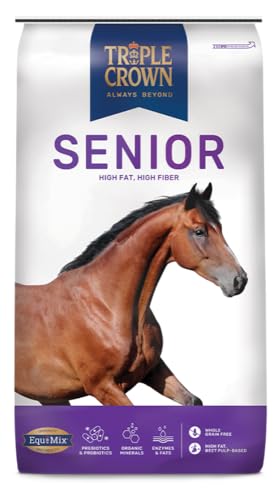
Triple Crown Triple Crown Senior Complete Feed
High-fat, high-fiber complete feed that adds calories and can replace forage for hard keepers.

Purina Purina Enrich Plus Ration Balancer
Low-calorie balancer that fills vitamin, mineral, and protein gaps for easy-keeper seniors.
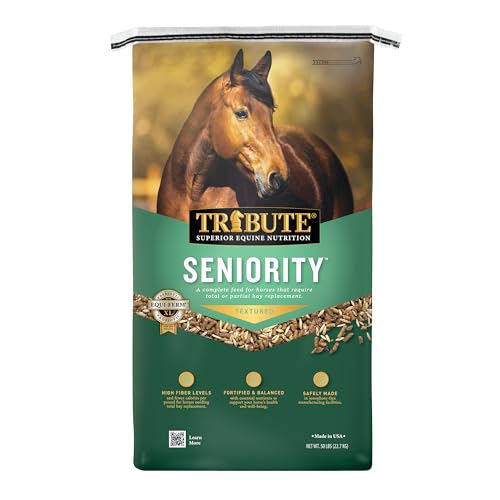
Kalmbach Feeds Kalmbach Tribute Maturity Senior Feed
Textured complete senior feed with quality protein and fat for topline and condition.
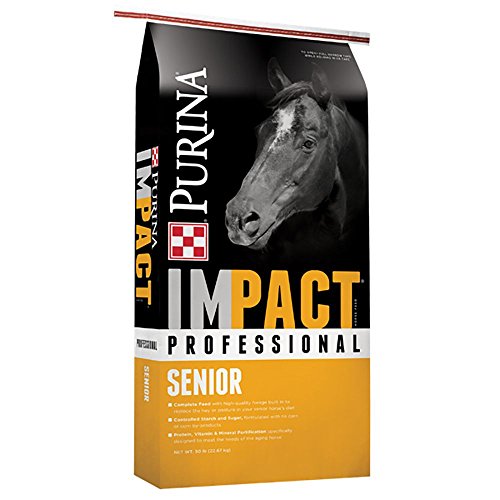
Purina Purina Impact Senior Feed
Pelleted complete senior feed designed to be soaked for horses with poor teeth.
Complete Senior Feed: Calories Plus Fiber
A complete senior feed is a high-volume product. It carries calories from fat and fermentable fiber, plenty of built-in forage so it can stand in for some or all of the hay, and full fortification when fed at the recommended rate. These feeds are usually soft, often soakable into a mash, and fed in real pounds per day. They exist to put and keep weight on horses that cannot get enough from hay, whether because of worn teeth, a hard-keeping metabolism, or recovery from illness.
Ration Balancer: Nutrients Without the Calories
A ration balancer is the opposite concept. It is a concentrated source of vitamins, minerals, and high-quality protein in a tiny daily serving, typically one to two pounds or less. It adds almost no calories and very little sugar or starch. Its whole reason for existing is the easy keeper that holds weight beautifully on hay but still needs the micronutrients and amino acids that forage alone may lack. For metabolic seniors, a low-NSC balancer is often the ideal concentrate.
Senior Feed vs Balancer at a Glance
| Factor | Complete Senior Feed | Ration Balancer |
|---|---|---|
| Daily amount | 5 to 15 lb | 1 to 2 lb |
| Calories | High | Very low |
| Replaces hay? | Partly or fully | No |
| Best for | Hard keepers, poor teeth | Easy keepers on good hay |
| Cost per day | Higher | Lower |
| Metabolic fit | Choose low-NSC version | Often ideal, low-NSC |
How to Choose
Start with body condition. If your horse holds a healthy Henneke score on hay alone, it likely needs balancing, not calories, so a ration balancer is the smart, economical pick. If your horse is dropping weight, losing topline, or can no longer chew hay, it needs the calories and replaceable fiber of a complete senior feed. Dental exams matter here: a horse that quids or drops half-chewed hay is telling you it cannot use long-stem forage, which pushes you toward a soakable complete feed.
Watch the Feeding Rate
The single biggest mistake is feeding the wrong amount. Fortification on these products assumes you feed the recommended rate. Feed a complete senior feed at only a handful when the bag calls for many pounds, and your horse misses out on vitamins and minerals. Feed a balancer like it is grain and you waste money. Always read the chart for your horse's weight and forage situation, weigh the feed, and transition gradually over a week or more.
Senior Horse Care Planner
Track your senior horse's vital signs, feed and body condition, farrier and dental schedule, medications, and quality of life, all in one printable planner.
The Bottom Line
A complete senior feed is for the horse that needs calories and forage replacement: the hard keeper, the poor-toothed senior, the horse rebuilding condition. A ration balancer is for the horse that needs nutrients but not calories: the easy keeper thriving on hay, and many metabolic horses. Choose by body condition and dental health rather than age, feed each at its proper rate, and let your vet or an equine nutritionist confirm the plan fits your individual senior.
Our Triple Crown Senior Gold review covers the high-calorie senior feed side of this decision, including the point most owners miss about what a complete feed has to be fed at to actually replace forage.
Editor's Pick · Affiliate link
Cosequin ASU for the Older Horse
The joint supplement with the most research behind it in horses, combining glucosamine and chondroitin with avocado and soybean unsaponifiables. Worth starting before an older horse is visibly stiff rather than after.
Frequently Asked Questions
What is the real difference between senior feed and a ration balancer?
Amount and purpose. A complete senior feed is fed in pounds, often 5 to 15 a day, and delivers calories, fiber, vitamins, and minerals all at once. It can partly or fully replace hay for a horse that cannot chew. A ration balancer is fed in ounces to a pound or two and delivers concentrated vitamins, minerals, and quality protein with almost no calories, designed to sit on top of good hay or pasture. Match the product to whether your horse needs calories or just nutrient balancing.
My senior is an easy keeper. Which should I feed?
Usually a ration balancer. An easy keeper that holds weight on hay does not need the extra calories of a full senior feed, and pouring pounds of calorie-dense feed into a round horse can worsen weight and metabolic risk. A ration balancer fills the vitamin, mineral, and protein gaps in a forage diet in a tiny daily serving without piling on calories. This is especially important for metabolic or laminitis-prone seniors, where keeping calories and sugar low protects the feet.
When does a horse actually need a complete senior feed?
When it cannot maintain weight or eat enough forage. The classic candidates are horses with significant dental wear that struggle with long-stem hay, hard keepers losing topline despite good hay, and seniors recovering from illness. A complete senior feed provides built-in fiber so it can replace some or all of the hay, plus the calories and protein needed to rebuild condition. If your horse holds weight well on hay alone, it likely needs balancing, not a full feed.
Can I feed both a senior feed and a balancer?
Usually you do not need to, and doing it wrong can oversupply nutrients. Complete senior feeds are already fortified with vitamins and minerals when fed at the full recommended rate, so adding a balancer on top can double up. The exception is when you feed less than the recommended amount of senior feed, in which case the horse may fall short on fortification and a balancer or top-dress can fill the gap. Check the feeding directions and ask your vet or an equine nutritionist before stacking products.
Are ration balancers safe for metabolic horses?
Many are, and they are often the preferred concentrate for PPID and EMS horses precisely because they add nutrients without much sugar, starch, or calories. The key is to choose a low-NSC balancer and feed it on a controlled, low-sugar forage base. Some balancers are alfalfa-based and higher in protein, which suits seniors needing topline, while grass-based versions suit others. As always, verify the analysis and confirm the choice with your vet for any insulin-dysregulated horse.
How do I switch from regular feed to one of these?
Gradually, over 7 to 10 days, mixing increasing amounts of the new product with decreasing amounts of the old to protect the gut from sudden change. Start by reading the bag's feeding chart for your horse's weight and forage situation, since the right daily amount differs hugely between a balancer and a complete feed. Weigh the feed rather than scooping by volume, watch body condition over several weeks, and adjust with your vet's guidance rather than all at once.
Need more help with your senior horse?
Browse our guides by topic to find practical solutions.
Wellness Planner: $39