Hay Pellets vs Cubes for Senior Horses
Compare hay pellets and hay cubes for older horses: chewability, soaking, choke risk, dust, sugar content, and cost as a forage replacement for poor teeth.
When an older horse starts dropping wads of half-chewed hay, the dental clock is ticking, and many owners turn to processed forage. The two most common choices are hay pellets and hay cubes. Both are made from real forage like timothy, alfalfa, or grass mixes, and both can stretch from a simple topper to a complete hay replacement. They differ in size, how much chewing they demand, choke risk, and how easily they soak into a mash. This comparison helps you match the right form to your senior's mouth and management.
Whatever you choose, build the diet around tested forage and confirm any major change with your vet, especially for a horse with dental disease, choke history, or metabolic concerns.
Hay Pellets and Cubes for Senior Horses
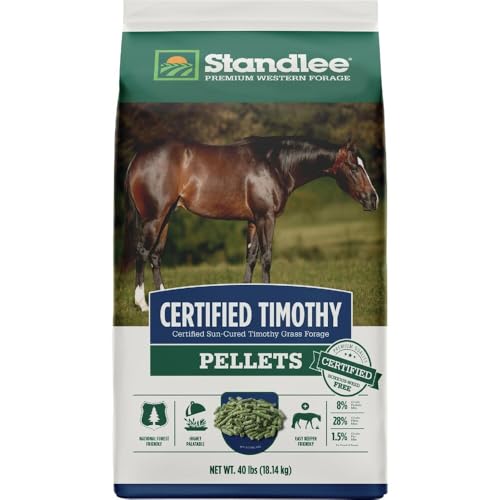
Standlee Standlee Timothy Pellets
Quick-soaking timothy pellets that break into a soft mash for horses with worn teeth.
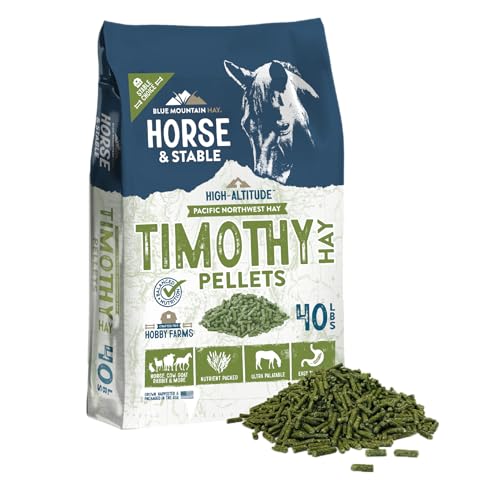
Blue Mountain Hay Blue Mountain Timothy Hay Pellets
Low-dust, quick-soaking timothy pellets that are easy to measure for forage replacement.
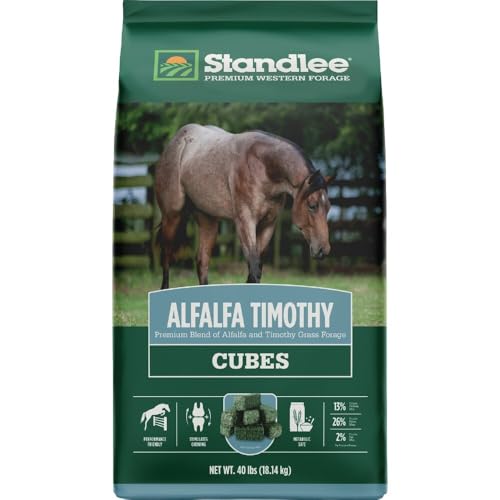
Standlee Standlee Alfalfa/Timothy Cubes
Forage cubes that soak into a soft pulp for horses that can still manage some chewing.

Standlee Standlee Timothy Mini Cubes
Smaller timothy cubes that soak quickly and reduce choke risk for older horses.
The Basic Difference
Hay pellets are forage ground fine and pressed into small, dense pellets, often a quarter inch or less across. Hay cubes are forage chopped coarser and compressed into firm chunks roughly one to two inches in size. Both deliver real fiber and can carry the same forage types, from pure timothy to alfalfa to grass blends. The size difference is what drives most of the practical decisions for a senior horse.
Chewability and Choke
For a horse with worn or missing teeth, pellets win on ease. Soaked, they collapse into a porridge that needs almost no grinding. Cubes are firmer and larger, so a horse with compromised teeth has to work harder, and dry cubes are a recognized choke hazard for fast eaters. The simple rule: the worse the teeth and the faster the eater, the more you lean toward pellets and the more thoroughly you soak whatever you feed.
Pellets vs Cubes Compared
| Factor | Hay Pellets | Hay Cubes |
|---|---|---|
| Size | Small, ground fine | Larger, coarse chunks |
| Chewing needed | Minimal when soaked | More, unless well soaked |
| Choke risk dry | Lower | Higher |
| Soak time | Fast, 10 to 20 min | Longer, 30 min plus |
| Chewing satisfaction | Lower | Higher when chewable |
| Dust | Very low | Low |
Chew Time and Behavior
There is one point in the cubes' favor. Horses are built to chew for many hours a day, and that grinding supports saliva production, gut health, and mental contentment. A horse with decent teeth may benefit from the extra chew time cubes provide, and they slow eating compared to a fast-melting pellet mash. For a horse that can still chew, lightly soaked cubes can be a nice middle ground that keeps the jaw busy. For a horse that truly cannot chew, that advantage disappears and pellets become the practical answer.
Cost, Dust, and Convenience
Both forms cost more per pound than baled hay but cut waste and dust dramatically, which matters for seniors with asthma or heaves. Pellets are the lowest-dust option and the fastest to soak. Cubes weigh and store cleanly and resist the wind better in an outdoor feeder. Either way, weigh your daily amount, since a full forage replacement at 1.5 to 2 percent of body weight adds up fast.
Senior Horse Care Planner
Track your senior horse's vital signs, feed and body condition, farrier and dental schedule, medications, and quality of life, all in one printable planner.
The Bottom Line
For a senior with seriously compromised teeth, soaked hay pellets are usually the gentler, safer choice. For a horse that can still chew and would benefit from longer eating time, soaked cubes keep the jaw working and slow the meal. Match the forage type to your horse's metabolic needs, soak when there is any choke or dental concern, transition gradually, and weigh the daily ration. Done right, either form can keep an older horse well fed long after long-stem hay stops working.
If beet pulp is also on your list, our Speedi-Beet review covers how it compares as a soaked forage replacement for a horse with almost no grinding surface.
Editor's Pick · Affiliate link
Cosequin ASU for the Older Horse
The joint supplement with the most research behind it in horses, combining glucosamine and chondroitin with avocado and soybean unsaponifiables. Worth starting before an older horse is visibly stiff rather than after.
Frequently Asked Questions
Which is easier for a senior horse with bad teeth, pellets or cubes?
Pellets, especially when soaked. Hay pellets are ground and pressed small, so once they break down into a wet mash they need almost no chewing, which suits a horse that quids or has lost grinding surfaces. Cubes are larger and firmer and ask for more chewing unless they are thoroughly soaked into a soft pulp. Many owners of horses with severe dental wear lean on soaked pellets as a forage replacement, while horses with better teeth can manage soaked cubes just fine.
Do I have to soak hay pellets and cubes?
You do not always have to, but it is often wise. Horses with poor teeth, a history of choke, or a tendency to bolt their feed should have both pellets and cubes soaked into a mash to prevent choke and aid chewing. Cubes in particular are a known choke risk when fed dry to a fast eater. Soaking also adds water to the diet, which helps hydration and gut motility in winter. Horses with good teeth and calm eating habits can sometimes have them dry, but when in doubt, soak.
Can pellets or cubes fully replace hay?
Yes, both can serve as a complete forage replacement when a horse can no longer chew long-stem hay, as long as you feed enough to match the horse's forage needs, usually around 1.5 to 2 percent of body weight daily. The key is to replace hay pound for pound on a dry-matter basis and split it into several meals to mimic steady grazing. Always transition over a week or two and confirm the plan with your vet, especially for a metabolic or hard-keeping senior.
Are pellets or cubes lower in sugar for a metabolic horse?
It depends on the forage type, not the shape. A timothy or low-sugar grass pellet and a timothy cube can both be appropriate for a metabolic horse, while alfalfa and high-sugar grass versions may be richer. For PPID, EMS, or laminitis-prone horses, choose a tested low-NSC product, look for published analysis, and ask your vet. Soaking before feeding can lower sugar content further. Never assume a forage product is safe for an insulin-dysregulated horse without checking the numbers.
How much do feeding costs differ?
Pellets and cubes usually cost more per pound than baled hay because of the processing, but they can pay off by reducing waste, dust, and the labor of managing a horse that drops half its hay on the ground. Cubes and pellets are also easy to weigh precisely, which helps with portion control. For a senior eating a partial replacement they are a manageable add-on; for a full forage replacement they become the bulk of the feed bill, so price the daily amount before you commit.
Is dust a concern with either one?
Both are far lower in dust than baled hay, which is a real advantage for senior horses with equine asthma or heaves. Pellets tend to be the lowest-dust option, and soaking either form essentially eliminates airborne particles. If your older horse coughs on hay, struggles in a dusty barn, or has a diagnosed respiratory condition, switching some or all of the forage to soaked pellets or cubes can make a noticeable difference in comfort and breathing.
Need more help with your senior horse?
Browse our guides by topic to find practical solutions.
Wellness Planner: $39