Horse Blanket Weight and Fill Guide for Seniors
Turnout blanket weights and fill explained for senior horses: denier vs grams of fill, rainsheet to heavyweight, when to blanket, fit, and avoiding over-blanketing.
Blanket shopping throws a wall of numbers at you: 600D, 1200D, 100g, 200g, 300g, rainsheet, midweight, heavyweight. For an owner of an older horse it is worth understanding what those numbers mean, because seniors regulate their body temperature less efficiently than younger horses and often need more warmth than their barnmates. This guide explains denier and fill, walks through the weight categories, and helps you match the right blanket to your senior's coat, condition, and climate without over or under doing it.
Blanketing is individual. Use this as a framework and adjust to your own horse's body condition, coat, and weather, checking with your vet if your senior is struggling to stay warm or hold weight.
Turnout Blankets by Weight

Tech Equestrian Tech Equestrian 1200D Rain Sheet
Waterproof, breathable 0g rainsheet for cool wet weather without trapping heat.
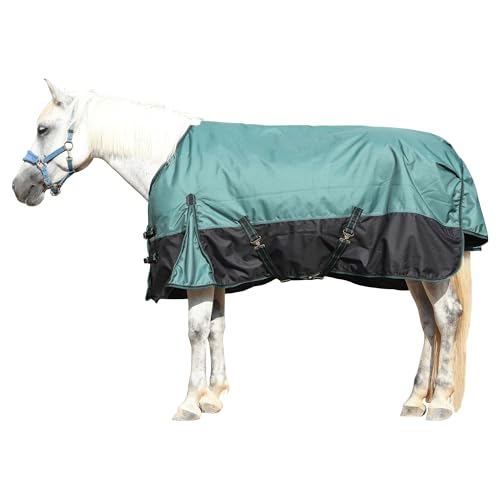
Gallopoff Gallopoff 1200D Medium 200g Blanket
Medium-weight 200g turnout for cold weather, a versatile choice for many seniors.

Challenger Challenger 1200D Heavyweight 300g
Heavyweight 300g fill turnout for hard freezes, clipped, or thin senior horses.

Tough 1 Tough1 600D Turnout Sheet
Lighter 600D turnout sheet for quiet seniors turned out alone in milder weather.
Denier vs Fill: Two Different Numbers
The single most useful thing to understand is that denier and fill measure completely different things. Denier, written with a D, describes the toughness of the outer shell. A 1200D blanket has a stronger, more tear-resistant outer fabric than a 600D one. Fill, written in grams, describes the insulating polyfill inside, and it is the only number that determines warmth. A blanket can be high denier and zero fill, like a tough rainsheet, or lower denier with heavy fill. Match denier to your turnout roughness and fill to your temperature.
The Weight Categories
Blankets sort into a few broad warmth levels. A rainsheet has 0g fill and only sheds rain and wind, useful for a cool, wet day when the horse does not need insulation. A lightweight runs around 100g, for chilly weather. A medium or midweight is usually 150 to 250g, the most versatile category for cold conditions. A heavyweight is 300g and up, reserved for hard freezes, clipped horses, and thin or struggling seniors that need maximum warmth.
Blanket Weight Guide
| Type | Fill | Rough Temperature | Best For |
|---|---|---|---|
| Rainsheet | 0g | 45 to 60 F, wet | Rain and wind only |
| Lightweight | ~100g | 40 to 50 F | Chilly days |
| Medium | 150 to 250g | 30 to 45 F | Most cold weather |
| Heavyweight | 300g and up | Below 30 F | Clipped or thin seniors |
When to Blanket a Senior
Not every older horse needs a blanket. A healthy senior with a thick coat, good body condition, and shelter often stays warm on its own, because a fluffed coat traps insulating air. Blanketing matters most for horses that are clipped, underweight, ill, or unable to grow a proper coat, and in cold wet wind that flattens the coat and strips its warmth. Because seniors regulate temperature less efficiently, many benefit from a blanket sooner than younger horses, but the decision should follow the individual horse, not the calendar.
Avoiding Over-Blanketing
More is not always better. A horse sweating under too much blanket can chill once damp and wastes energy, while heavy blanketing suppresses the natural coat. Check under the blanket at the shoulder and flank: warm and dry is right, sweaty or cold means you have the wrong weight on. Swap weights as temperatures swing, keep blankets dry, and check fit often, since rubs and pressure sores hide easily under fabric, especially on a senior with a changed body shape.
Senior Horse Care Planner
Track your senior horse's vital signs, feed and body condition, farrier and dental schedule, medications, and quality of life, all in one printable planner.
The Bottom Line
Denier tells you how tough the shell is, fill in grams tells you how warm the blanket is, and the two are independent choices. Match denier to how rough your turnout is and fill to the temperatures your horse faces, leaning toward more warmth for clipped, thin, or frail seniors that regulate heat poorly. Fit the blanket carefully, check underneath to avoid over-blanketing, and let your individual horse's condition and coat, not the season alone, guide what goes on its back.
For specific rugs, see our Horze Nevada 200g review and our Country Pride Glacier 300g review, which cover the two fill weights most owners end up choosing between.
Editor's Pick · Affiliate link
Cosequin ASU for the Older Horse
The joint supplement with the most research behind it in horses, combining glucosamine and chondroitin with avocado and soybean unsaponifiables. Worth starting before an older horse is visibly stiff rather than after.
Frequently Asked Questions
What do denier and fill grams mean on a turnout blanket?
Denier measures the toughness of the outer shell fabric, so a 1200D blanket resists tearing and rubbing better than a 600D one. Fill, given in grams, measures the insulating polyfill inside, and it is what determines warmth. A 0g rainsheet has no fill and only sheds water, while 100g is light, 200g is medium, and 300g or more is heavyweight. Denier protects the blanket from damage, while fill keeps the horse warm. Senior horses often need more fill than you would expect.
What fill weight does my senior horse need?
It depends on the temperature, your horse's coat, clip, and condition, but seniors generally need more warmth than younger horses because they regulate temperature less efficiently and may carry less muscle and fat. As a rough guide, a rainsheet or light fill suits cool, wet weather around 45 to 55 degrees, a medium 200g works for cold around 30 to 45 degrees, and a heavyweight 300g or more is for hard freezes, clipped horses, or thin seniors. Watch your individual horse and adjust.
Does my senior horse even need a blanket?
Not every senior does. A healthy older horse with a thick winter coat, good body condition, and shelter often stays warm without one, since the coat traps insulating air. Blankets become important for horses that are clipped, underweight, struggling to hold condition, recovering from illness, or unable to grow a proper coat, as well as in cold wet wind that flattens the coat. Assess your horse's condition and circumstances rather than blanketing automatically, and remember a wet, flattened coat loses much of its warmth.
Can over-blanketing harm a horse?
Yes. A horse that is too warm under a heavy blanket will sweat, and a damp horse under a blanket can actually chill, plus sweating wastes energy and can lead to skin issues. Over-blanketing also suppresses the horse's natural coat and its ability to self-regulate. The fix is to match the blanket to the weather and check underneath: a horse that is warm and dry at the shoulder and flank is right, while sweat or a chill means you have the wrong weight on. Adjust as temperatures swing.
What denier should I choose for a turnout blanket?
Higher denier means a tougher shell, so for a horse turned out in a herd or one that is rough on gear, 1200D or higher resists tears and rubs and lasts longer. For a quiet senior turned out alone or only briefly, a 600D blanket can be enough and is often lighter and less stiff. Denier does not affect warmth, only durability, so pair the right denier for your turnout situation with the right fill for the temperature your horse faces.
How do I fit a blanket on an older horse?
Measure from the center of the chest, around the widest part of the shoulder and barrel, to the edge of the tail, in inches, to get the blanket size. A good fit clears the withers, allows a hand's width at the chest and shoulders for movement, and does not slip or gape. Seniors with changed body shape, such as a dropped topline or a sway back, may need adjustable or shaped blankets to prevent rubs. Check fit regularly, since rubs and pressure sores are easy to miss under a blanket.
Need more help with your senior horse?
Browse our guides by topic to find practical solutions.
Wellness Planner: $39