Beet Pulp vs Hay Alternatives for Senior Horses
Compare beet pulp with hay pellets, cubes, and chopped forage for older horses: fiber, calories, sugar, soaking, choke risk, and when to use each.
When a senior horse needs more fiber, more calories, or simply an easier-to-chew feed, owners weigh beet pulp against the other big forage alternatives: hay pellets, hay cubes, and chopped forage. They overlap in some uses but are not the same. Beet pulp is a soft, fermentable byproduct fiber prized for weight gain and hydration, while hay-based products are forage in a convenient form that can replace baled hay outright. This comparison sorts out where each one fits in an older horse's diet and how to use them safely.
As always, build the ration around tested forage and run major changes past your vet, especially for a horse with metabolic disease, kidney issues, or a choke history.
Fiber Feeds and Hay Alternatives

Standlee Standlee Beet Pulp Shreds
Soakable, low-sugar fiber that adds gentle calories and water for hard-keeping seniors.

Standlee Standlee Beet Pulp Pellets
Pelleted beet pulp that soaks into a mash for easy chewing and added condition.

British Horse Feeds British Horse Feeds Speedi-Beet
Quick-soaking, 95% sugar-free beet pulp suited to laminitis-prone and metabolic horses.
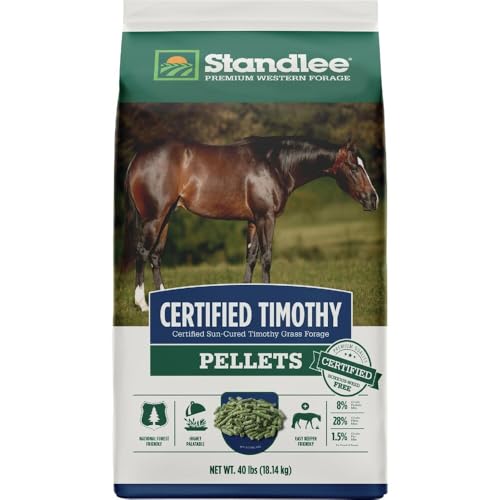
Standlee Standlee Timothy Pellets
Low-sugar forage pellets to use as a true hay replacement alongside beet pulp.
What Beet Pulp Actually Is
Beet pulp is the fibrous material left after sugar is extracted from sugar beets. Despite the source, the finished plain product is relatively low in sugar and starch, particularly once rinsed and soaked. It is a highly digestible, fermentable fiber that delivers slow-release calories, which is why it has a long track record as a safe weight-gain feed. It comes as shreds or pellets, both of which soak into a soft mash that suits horses with worn teeth.
What Counts as a Hay Alternative
Hay alternatives are forms of actual forage. Hay pellets and cubes are ground or chopped timothy, alfalfa, or grass pressed into a feedable shape. Chopped forage, sometimes called chaff, is simply cut short-stem hay. Because these are forage, they carry the full fiber profile a horse needs and can replace baled hay pound for pound when a senior can no longer chew. That is the crucial distinction: hay products can be the whole forage ration, while beet pulp is a supporting player.
Beet Pulp vs Hay Alternatives Compared
| Factor | Beet Pulp | Hay Pellets / Cubes |
|---|---|---|
| Source | Sugar beet fiber byproduct | Real forage, processed |
| Replace hay fully? | No, partial addition | Yes, pound for pound |
| Calories | High for the bulk | Moderate, forage-level |
| Sugar/starch | Low when unmolassed | Depends on forage type |
| Soaking | Required | Recommended for seniors |
| Best use | Weight gain, hydration | Forage replacement |
How to Use Them Together
For many senior horses the best answer is not either/or. A horse that cannot chew hay does well on soaked hay pellets or cubes as the forage base, with soaked beet pulp added when extra calories or hydration are needed. The beet pulp becomes the carrier for a ration balancer, supplements, and a little oil, all stirred into one easy mash. This combination covers the full forage requirement while still adding the gentle, slow-release energy that helps a thin senior hold condition.
Safety Notes
Soak beet pulp before feeding to prevent choke, choose an unmolassed product for metabolic horses, and feed soaked mashes fresh, since they spoil fast in warm weather. Transition any new fiber over a week or two to protect the gut. And weigh your forage replacement, since a horse needs roughly 1.5 to 2 percent of its body weight in forage each day whether it comes from cubes, pellets, or a mix.
Senior Horse Care Planner
Track your senior horse's vital signs, feed and body condition, farrier and dental schedule, medications, and quality of life, all in one printable planner.
The Bottom Line
Beet pulp and hay alternatives are not rivals so much as teammates. Reach for hay pellets or cubes when you need to replace forage your horse can no longer chew, and reach for beet pulp when you want a low-sugar calorie and hydration boost on top of that forage base. Choose unmolassed beet pulp, soak everything for a senior with dental or choke concerns, introduce changes gradually, and let your vet help you balance the whole ration for your individual horse.
Our Speedi-Beet review covers the quick-soak product that made beet pulp practical, along with the soaking rules that prevent choke.
Editor's Pick · Affiliate link
Cosequin ASU for the Older Horse
The joint supplement with the most research behind it in horses, combining glucosamine and chondroitin with avocado and soybean unsaponifiables. Worth starting before an older horse is visibly stiff rather than after.
Frequently Asked Questions
Is beet pulp safe for senior horses?
Yes, for most older horses beet pulp is a safe, gentle source of digestible fiber. It is a soft, soakable feed that suits horses with poor teeth and supports weight gain in hard keepers. It is also relatively low in sugar and starch once rinsed and soaked, which makes it a popular base for many metabolic horses. As with any feed change, introduce it gradually and confirm it fits your horse's overall diet with your vet, especially if your senior has kidney or metabolic concerns.
Do I have to soak beet pulp before feeding?
Soaking is strongly recommended. Beet pulp expands as it absorbs water, and feeding it dry to a horse that bolts feed can raise choke risk. Soaking 20 to 60 minutes, or longer for pellets, produces a safe, soft mash that is easy to chew and adds valuable water to the diet. Many owners rinse shreds first to wash off surface sugar, then soak. Use cool water in hot weather and feed promptly, since soaked beet pulp ferments and spoils quickly once warm.
Does beet pulp make horses hyper or hot?
No. This is a common myth. Beet pulp is a fermentable fiber, not a sugar or starch bomb, so it provides calories as slow-release energy rather than the quick, fizzy energy associated with grain. That makes it a good calorie source for putting weight on a senior without the behavior changes some owners fear from cereal grains. If your horse seems hot on beet pulp, look at the rest of the ration, since the beet pulp itself is unlikely to be the cause.
How is beet pulp different from hay pellets and cubes?
Hay pellets and cubes are simply forage in a processed shape and can fully replace hay. Beet pulp is a byproduct fiber, very digestible and calorie-dense for its bulk, but it lacks the full nutrient profile of forage. So beet pulp is best as a partial addition for calories, hydration, and easy chewing, not a complete forage replacement on its own. Hay pellets or cubes are the better choice when you need to replace long-stem hay entirely for a horse that cannot chew.
Can beet pulp help a horse that needs to gain weight?
Yes, it is one of the most popular weight-gain feeds for seniors. Beet pulp packs a good amount of digestible energy, soaks into an easy-to-eat mash, and can be topped with oil or a high-fat supplement for extra calories. For a hard-keeping older horse with poor teeth, a soaked beet pulp mash carrying their balancer, supplements, and a little oil is a proven way to add condition gently. Build the amount gradually and weigh the horse or use a body condition score to track progress.
Is beet pulp low enough in sugar for a laminitic horse?
Often yes, but verify. Plain, unmolassed beet pulp is generally low in sugar and starch, and rinsing and soaking lowers it further, which is why it appears in many laminitis and EMS diets. The caution is molassed beet pulp, which has added sugar and is not appropriate for metabolic horses. Always choose an unmolassed product, rinse and soak it, and check with your vet before adding it to the diet of a horse with PPID, EMS, or a laminitis history.
Need more help with your senior horse?
Browse our guides by topic to find practical solutions.
Wellness Planner: $39