Best Hock Boots for Senior Horses (Review)
Compare the best hock boots for horses to prevent capped hocks, rubs, and pressure sores in seniors that lie down often, with fit tips and how we chose.
For an older horse that lies down often to rest, the hocks take a beating. The point of the hock is bony and exposed, and a thin senior with little natural padding can rub it raw getting up and down on hard floors or thin bedding. Over time this leads to hair loss, calluses, and capped hocks, those soft, fluid-filled swellings over the joint. Hock boots are a simple, inexpensive way to cushion and protect those vulnerable joints.
This guide compares well-regarded hock boots and shields, from basic fleece-lined protectors to more padded options, with a quick comparison, how we chose, and advice on fit and use. Paired with deep, soft bedding, the right hock boots can keep your senior horse's hind legs comfortable and rub-free.
Our Top Hock Protection Picks

Intrepid International Intrepid Click Hock Shield (Fleece-Lined)
A fleece-lined hock shield to prevent rubs and capped hocks in horses that lie down often

Intrepid International Intrepid Click Hock Shield (Alt)
The same fleece-lined click hock shield design in an alternate style
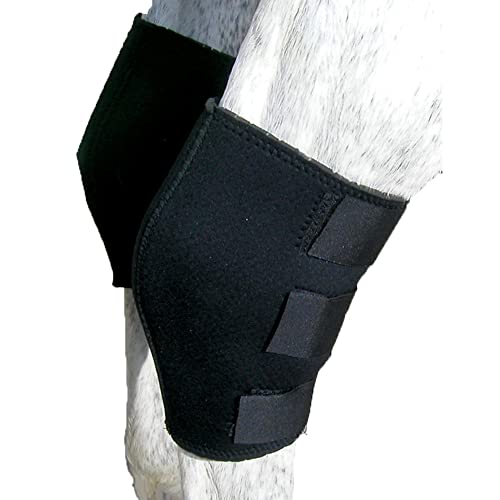
Intrepid International Intrepid Neoprene Hock Boots
Breathable neoprene hock boots offering support and protection for the point of the hock

Hilason Hilason Neoprene Hock Sweat Boots
Affordable neoprene hock boots that protect and support the hock area

Harrison Howard Harrison Howard Shock-Absorbing Boots
Padded, shock-absorbing leg boots for horses that need extra cushioning during travel
Quick Comparison
| Product | Material | Best For |
|---|---|---|
| Intrepid Click Hock Shield | Fleece-lined | Preventing rubs and capped hocks |
| Intrepid Click Hock Shield (Alt) | Fleece-lined | Same, alternate style |
| Intrepid Neoprene Hock Boots | Neoprene | Support and protection |
| Hilason Neoprene Hock Boots | Neoprene | Affordable protection |
| Harrison Howard Boots | Padded/shock-absorbing | Extra cushioning and travel |
How We Chose
These picks are based on research into materials and design, brand reputation, intended use, and patterns across verified owner reviews. We did not test these boots on horses or run a barn trial. We included a range so there is a sensible option for different needs: fleece-lined shields focused on preventing rubs and capped hocks, breathable neoprene boots for support and protection, an affordable value choice, and a more padded shock-absorbing option for horses that knock their hocks or travel often.
Senior Horse Care Planner
Track your senior horse's vital signs, feed and body condition, farrier and dental schedule, medications, and quality of life, all in one printable planner.
Fleece Shields vs Neoprene vs Padded Boots
Hock protection comes in a few styles, each suited to a different problem. Fleece-lined hock shields are primarily about preventing friction rubs and capped hocks, ideal for a senior who lies down a lot and wears the hair off the joint. Neoprene boots wrap the hock more firmly, offering support and protection with a snug fit. Padded, shock-absorbing boots add cushioning for horses that bang their hocks in a stall or trailer or need extra protection during travel. Choosing well means matching the boot to your horse's specific issue rather than buying the most expensive option.
Fit and Safe Use
- Get the fit right: Snug but not constricting, so the boot stays put without restricting circulation.
- Introduce gradually: Let your horse get used to the boots with short, supervised wear before longer use.
- Check often: Inspect the legs and boots regularly for slipping, rubbing, or swelling, especially at first.
- Keep them clean: Dirt and grit inside a boot can cause the very rubs you are trying to prevent.
- Bedding first: Deep, soft bedding is the foundation; boots are an added layer of protection.
Where Hock Boots Fit in Senior Care
Hock boots are a small but genuinely useful comfort item for the right horse. A thin, arthritic senior who spends a lot of time lying down is exactly the kind of horse prone to hock rubs and capped hocks, and a well-fitted shield can prevent painful sores. Remember that boots work best alongside good husbandry: plenty of deep, clean bedding, safe stall and trailer surfaces, and attention to why your horse is lying down so much. If you spot an existing capped hock, swelling, or open sore, have your vet take a look rather than simply covering it up.
This article is educational and does not replace advice from your equine veterinarian. Any swelling, sore, or persistent rub on the hock should be evaluated by your vet.
Related Guides
- Managing Chronic Pain in Senior Horses - The full comfort plan.
- Best Fleece Coolers for Horses - Warmth and comfort in the stable.
- Keeping a Senior Horse Comfortable in Winter - Bedding and comfort tips.
Editor's Pick · Affiliate link
Cosequin ASU for the Older Horse
The joint supplement with the most research behind it in horses, combining glucosamine and chondroitin with avocado and soybean unsaponifiables. Worth starting before an older horse is visibly stiff rather than after.
Frequently Asked Questions
What are hock boots and what do they do?
Hock boots are protective wraps that fit over a horse's hocks, the large joints in the hind legs. They cushion and shield the point of the hock from rubs, sores, and capped hocks that develop when a horse lies down on hard or sparse bedding, or knocks the hocks in a stall or trailer. Some are simple fleece-lined shields for prevention, while others add shock-absorbing padding. For senior horses that lie down often or have prominent, bony hocks, they can prevent painful pressure sores.
Why do senior horses get sores on their hocks?
Older horses often lie down more to rest tired bodies, and a thin, bony senior with less natural padding is especially prone to rubbing the point of the hock against the ground when getting up and down. Hard floors, thin or pushed-aside bedding, and repeated friction lead to hair loss, calluses, and capped hocks, which are fluid-filled swellings over the joint. Deep, soft bedding is the first defense, and hock boots add protection for horses that still develop rubs despite good bedding.
Are hock boots safe to leave on overnight?
Many hock boots are designed for stable use including overnight wear, but fit and monitoring matter. A boot that is too tight can restrict circulation or slip and tangle, while one that is too loose will rotate and rub. Check the manufacturer's guidance, ensure a snug but not constricting fit, and inspect the legs and the boots regularly for slipping, rubbing, or swelling. Introduce them gradually so your horse gets used to them, and remove and check the skin underneath daily.
What is a capped hock and can boots prevent it?
A capped hock is a soft, fluid-filled swelling over the point of the hock, usually caused by repeated trauma such as lying on hard ground or kicking in a stall or trailer. It is often more of a cosmetic blemish than a soundness problem, but it can be a sign of inadequate bedding or a behavior worth addressing. Protective hock boots, combined with deep soft bedding, can help prevent the repeated trauma that causes capped hocks, though an existing one should be assessed by your vet.
Should I choose fleece-lined or shock-absorbing hock boots?
It depends on the problem. Fleece-lined hock shields are mainly about preventing rubs and capped hocks from friction, and they suit horses that lie down a lot or rub in the stall. Shock-absorbing or padded boots add cushioning for horses that knock their hocks or need extra protection during travel. Some horses do well with a simple fleece shield, while a bony senior or a frequent traveler may benefit from more padding. Match the boot to your horse's specific situation.
How do I get my horse used to wearing hock boots?
Introduce them calmly and gradually. Let your horse see and sniff the boots first, then fit them in a safe, enclosed space and allow a short period of supervised wear before leaving them on longer. Make sure the fit is snug but comfortable so they do not slip, since a sliding boot can startle a horse. Check frequently in the early days for rubbing or slipping. Most horses accept well-fitted hock boots quickly once they realize they are harmless.
Need more help with your senior horse?
Browse our guides by topic to find practical solutions.
Wellness Planner: $39